When the stakes are high, access and execution are key.
This is not an empty slogan. MSSG delivers where others hesitate to go. We help companies and organisations enter difficult markets, reach decision-makers, test demand and protect their reputation across the EU and Ukraine.

We define the offer, check demand and product claims, then build the relationships needed to move forward. We also support clients through scrutiny and crises.
1
Define the offer
Clarify the product, its intended users and the problem it solves.
2
Validate demand and claims
Check customer demand, user needs and product claims. Where relevant, organise field and battlefield tests with appropriate partners.
3
Build relationships and market access
Use the findings to approach partners, institutions and media, make introductions and develop a route to market.
4
Protect the project
Support the client through scrutiny, crises and reputational attacks whenever they arise.
We bring in public-affairs, legal, defence, technology and Ukraine specialists according to the work required.*
* Some of our collaborators' identities are kept confidential for security reasons due to the sensitive nature of their work and are disclosed to clients under NDA only.
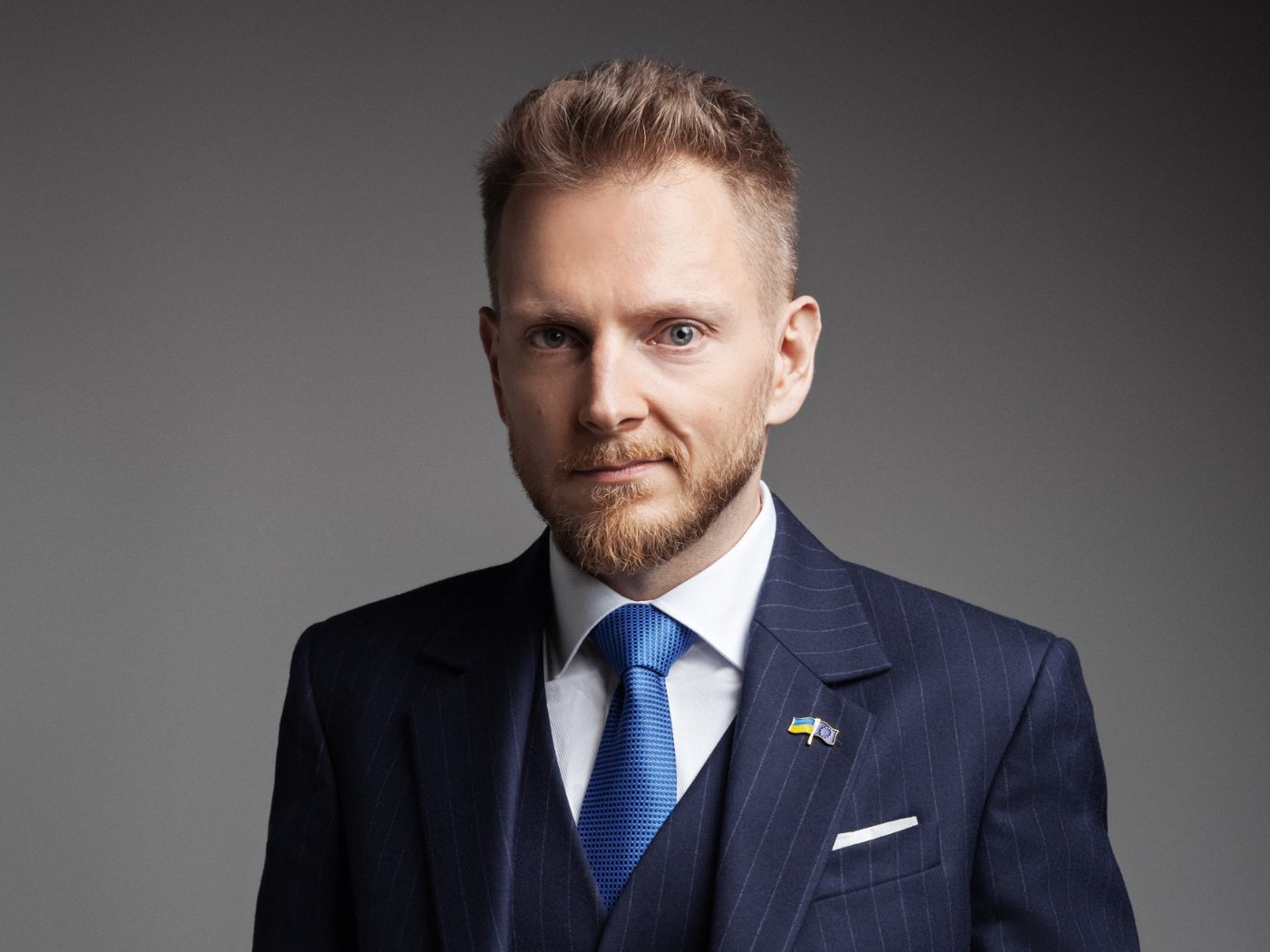
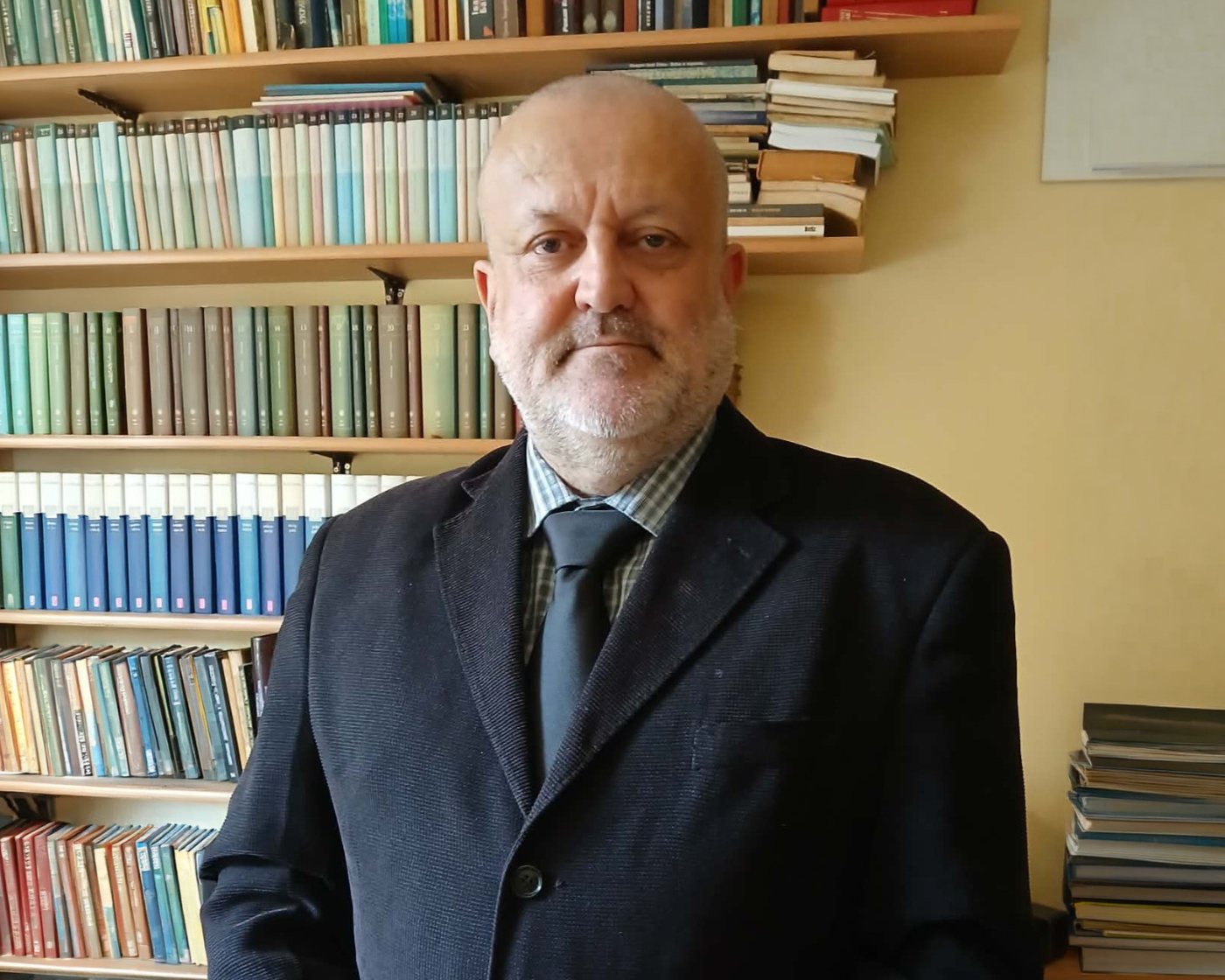
Founder and Chief Strategic Advisor
Martin Mycielski
22 years across EU institutions, government, journalism, international NGOs, crisis communications, public affairs and Ukraine field operations. Four Ukrainian decorations for leading front-line missions, three European public affairs and campaign awards, two motorcycles, one Ukrainian wife.
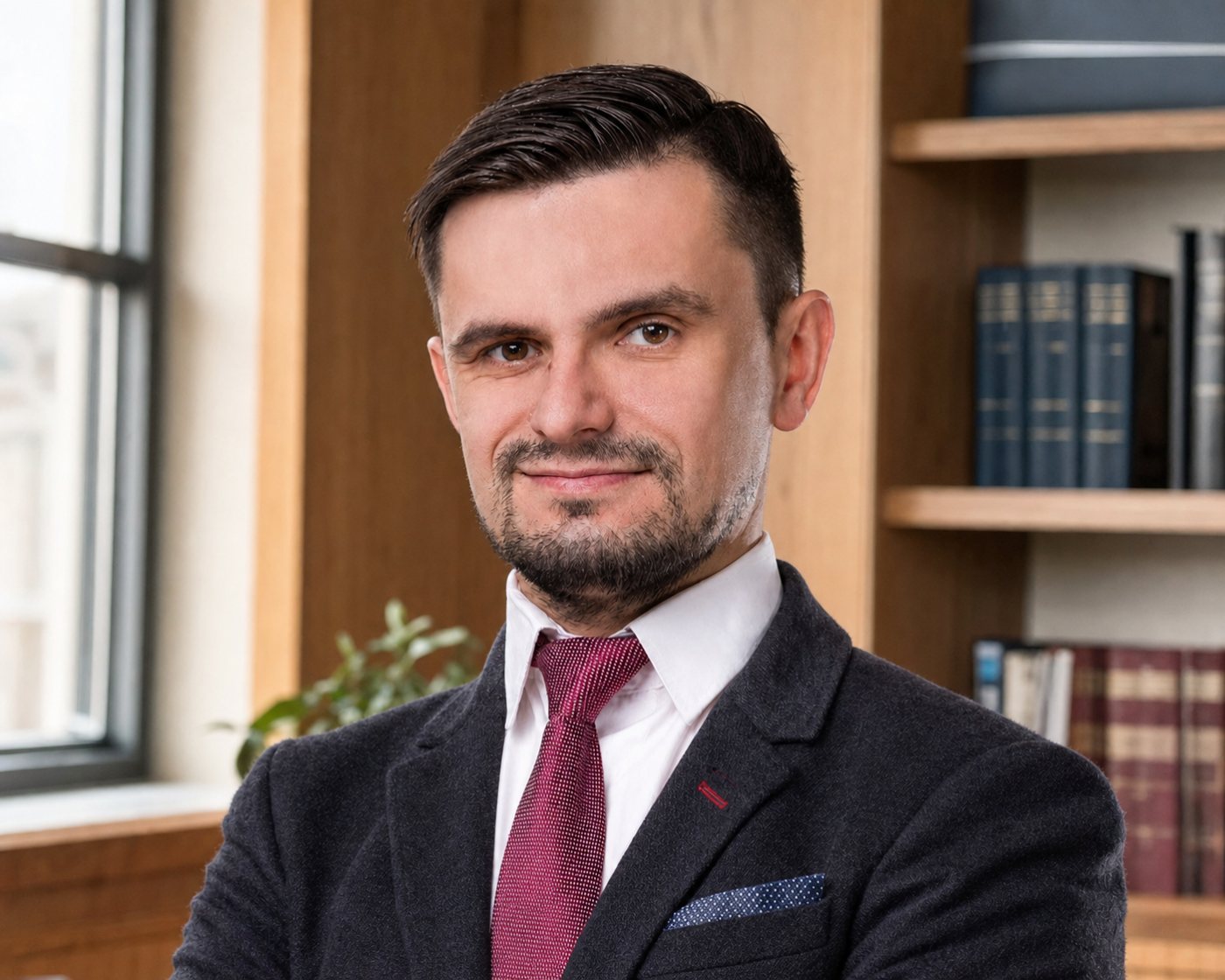
Ukrainian attorney and member of the Association of Lawyers of Ukraine since 2012. Experienced in corporate affairs and cooperation with state authorities, including company setup, administrative procedures, permits and certification routes for international clients.
Ukraine Operations and Institutional Liaison
Natalia Melnychenko
Ukraine Projects Coordinator with deep experience organising front-line humanitarian missions, fundraising and cooperation with military units and local authorities. Twice decorated by the Verkhovna Rada of Ukraine.
Security, Military and Field Operations
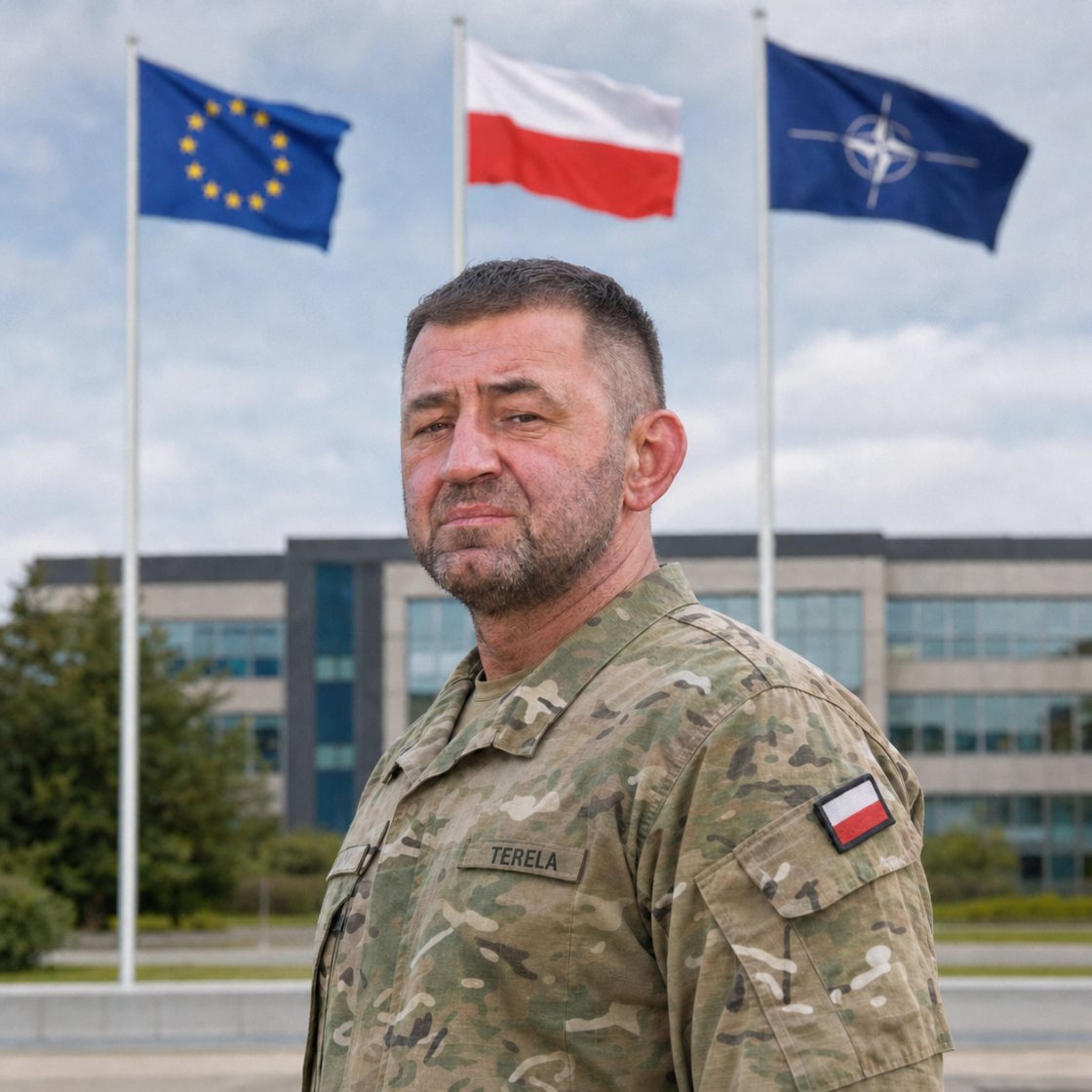
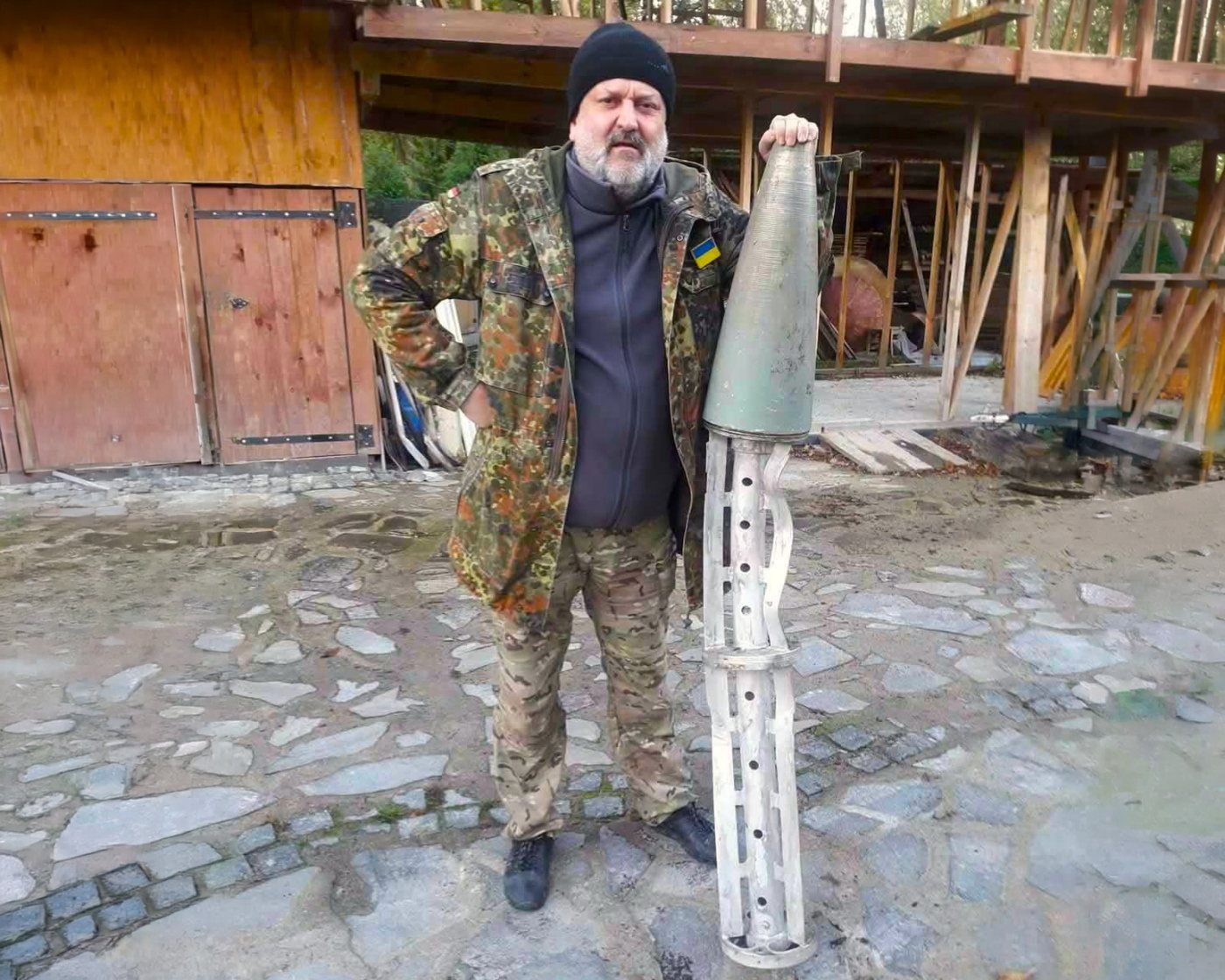
Major (Ret.) Robert Terela
Former Government Protection Bureau officer with specialist and postgraduate training in explosives technology and pyrotechnics. Responsible for the security and logistics of missions near the Ukrainian front, and a trainer of Ukrainian soldiers. Brings senior military and law enforcement expertise to the team.
Ukraine Field Intelligence, Cultural Mediation and Mission Logistics
Aleksander Steć
Retired law-enforcement officer, translator and cultural mediator specialising in Polish-Ukrainian relations and regional differences within Ukraine. He has extensive professional experience in gathering and verifying information through human sources, building trusted local networks and managing the logistics of humanitarian missions. A Helsinki Human Rights School graduate, long-time La Strada collaborator and former two-term president of the Association of Ukrainian Former Political Prisoners and Repression Victims in Poland.
Digital Intelligence and Marketing
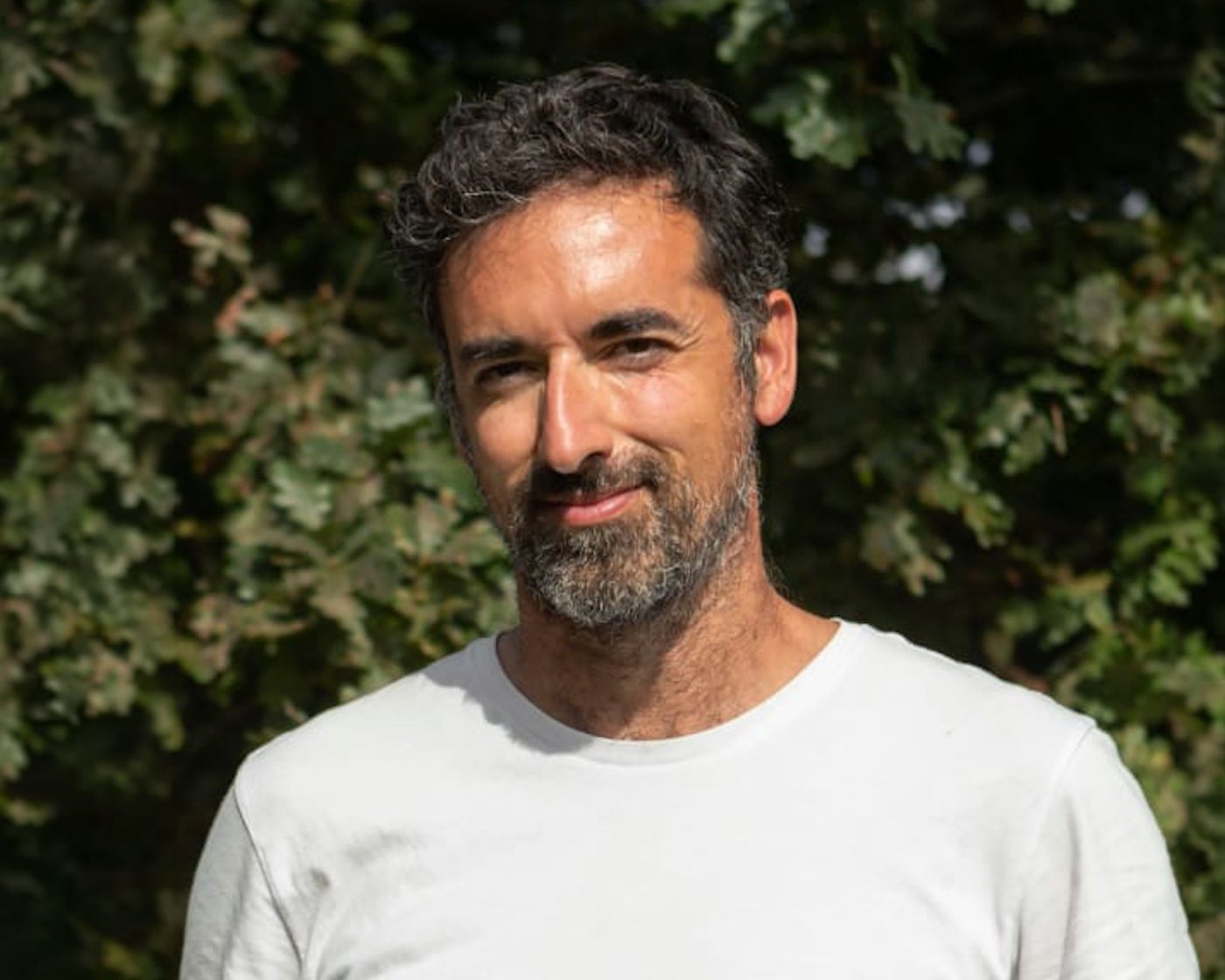
Carlos Chaves
Carlos helps organisations turn online conversations, audience behaviour and emerging narratives into actionable marketing and communications strategies. With over 15 years of experience in EU policy and digital marketing, he specialises in social data, influencer research, paid media and campaign measurement. He is also a professor at Nebrija University in Madrid.
Data Analytics & Marketing Measurement
Piotr Sieradzki
Data analyst specialising in marketing attribution, web analytics and data modelling, with experience delivering insights for banking, e-commerce and international clients including major European banks. Fluent in Python, SQL, BigQuery and the Digital Analytics stack, with a Computer Science (AI) background that lets him build the pipelines, dashboards and models behind sound decisions — including privacy-compliant, GDPR-ready tracking and consent management. Works across Polish, English, Ukrainian and Russian, and a long-time volunteer with Ukraine- and Moldova-focused initiatives.
EU-Ukraine Trade and Reconstruction
Oleksandra
EU Member State foreign ministry official responsible for trade relations with Ukraine and the Rebuild Ukraine programme, formerly with Ukraine's Chancellery of the Prime Minister. Experienced in B2B matchmaking, trade missions, EU programmes, digital transformation and international cooperation.
Regulatory, Compliance and Defence
Kamil
Corporate lawyer and arbitrator with more than 14 years of experience in regulatory disputes, investigations, compliance and highly regulated sectors. Co-heads a defence and dual-use practice and leads a compliance and regulatory disputes team at a leading professional-services firm.
AI, Software and Avionics
Tomasz
Intelligent Manufacturing Engineer at the world's leading semiconductor foundry, with experience in data science, AI, cloud systems, cybersecurity, software engineering, telecommunications and avionics. He checks whether a product can actually be built, integrated and deployed.
A difficult market, a blocked introduction, a credibility problem or an opportunity that needs checking - start with the situation, not a formal brief.
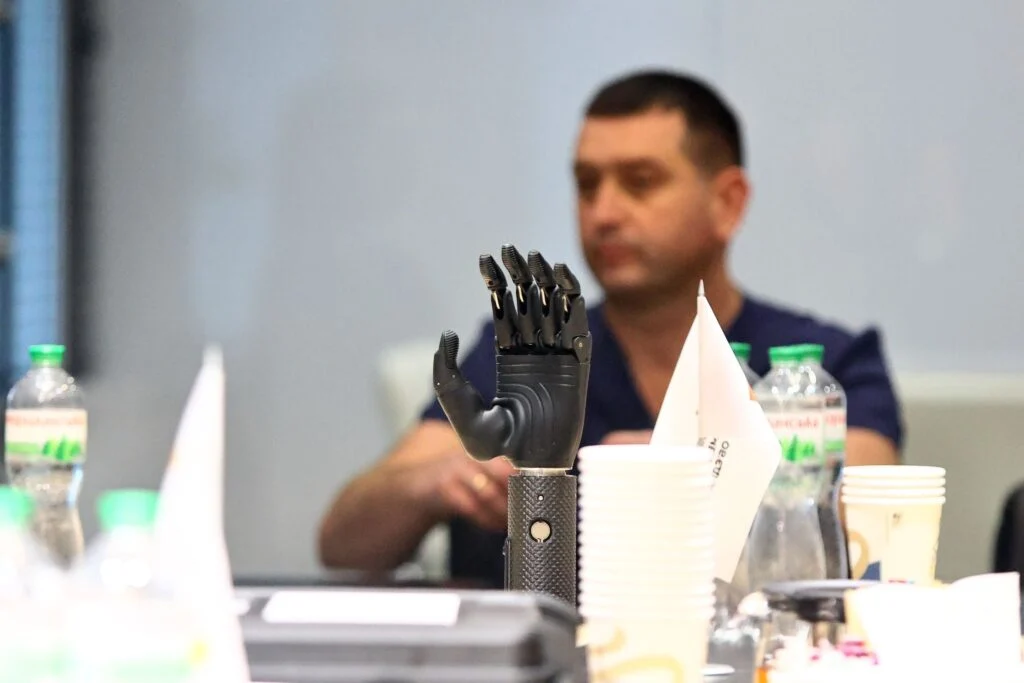
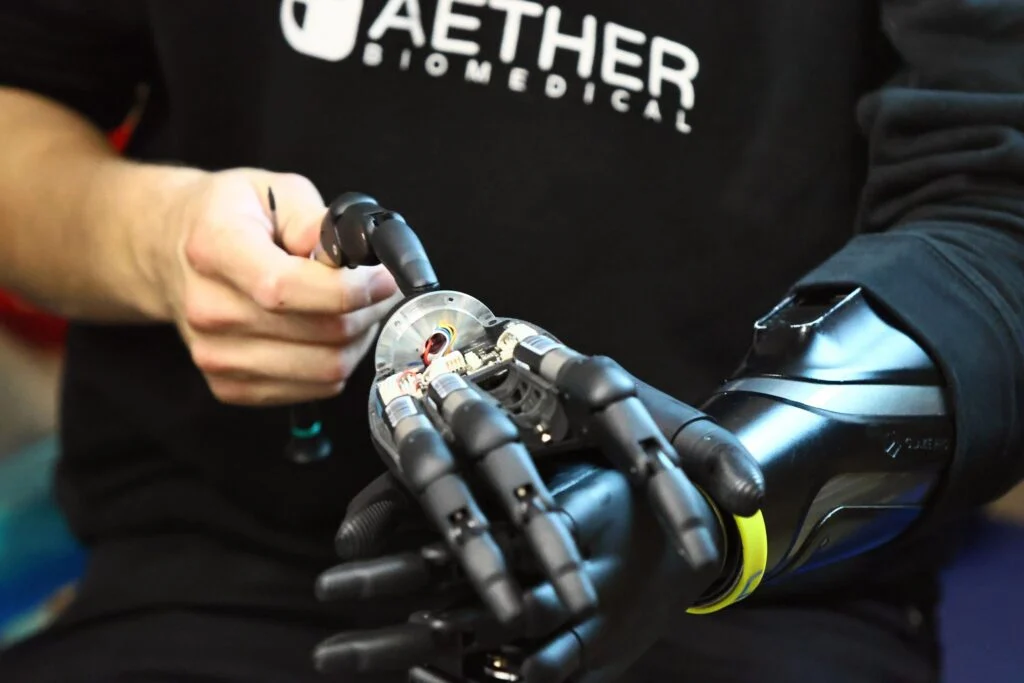
In 2024, we were tasked with helping Poland's first manufacturer of bionic hand prostheses enter the highly competitive and already saturated Ukrainian market.
We took the assignment because the Zeus bionic hand could materially improve the lives of Ukrainian veterans, and because our existing Ukraine network gave us a realistic way to test that potential.
From the outset, we defined success as more than selling a few prostheses. Sustainable market entry required five things: regulatory clearance, an effective reimbursement pathway, trusted clinical partners, local operational capacity and proof that the product delivered real value to Ukrainian users.
A short-term sales spike without those foundations would have been an expensive demonstration project, not a viable business.
Understanding the product and the market
The first step was research. Long and in-depth.
On the one hand, we needed to understand the product. What exactly is a bionic hand? How does it compare with passive, body-powered or single-action prostheses? Does Zeus offer meaningful added value over products already available in Ukraine? Does it have a defensible competitive advantage?
On the other hand, we needed to know far more than anyone could find through desk research or Google. We had to understand veterans' actual needs and the realities of Ukrainian reimbursement, certification and procurement procedures. We needed to assess how open clinics and hospitals would be to admitting a new market player - and potentially disrupting their long-established commercial relationships.
Last but not least, particularly in Ukraine, we had to identify the roadblocks, vested interests and potential threats involved in challenging a billion-dollar status quo.
The research phase therefore produced more than a market report. We mapped the full decision-making ecosystem: ministries and reimbursement authorities, public and private prosthetic centres, rehabilitation hospitals, clinicians, patient organisations, charities, international donors, local authorities and potential commercial partners.
We also examined the entire route from clinical qualification and product fitting to reimbursement and payment - because demand means little if nobody can identify who ultimately pays, under what procedure and on what timescale.
We benchmarked Zeus against the products already available in Ukraine, looking not only at headline price and functionality but also at lead times, fitting requirements, training, maintenance, spare parts, warranty support and the total cost of ownership.
Knowing how much we did not know was crucial. It allowed us to develop a roadmap for the first months and identify the capabilities we needed internally to carry out the project properly.
Martin, as project lead, assembled a team capable of covering every part of the market-entry process:
Natalia, our Polish-Ukrainian relations expert and institutional liaison, was responsible for stakeholder outreach and all research requiring direct Ukrainian contacts.
Roman, our Kyiv-based compliance lawyer specialising in certification, administrative procedures and government relations, became our go-to expert on regulatory compliance, reimbursement pathways and whether the product could legally be offered to Ukrainian veterans.
Robert, our defence and security professional, was responsible for field-mission logistics and operational safety.
A senior Polish Border Guard official, whose identity we keep confidential, helped ensure the smooth passage of our missions across the Polish-Ukrainian border.
Additional team members handled translation, promotional materials, communications management, administration, accounting and secretarial support as required.
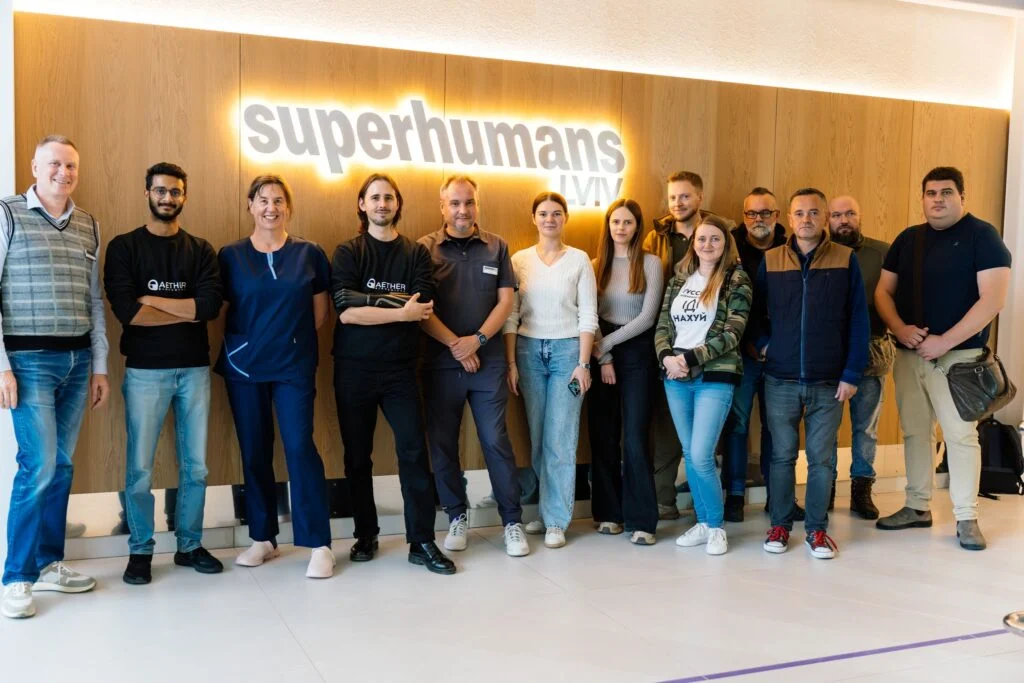
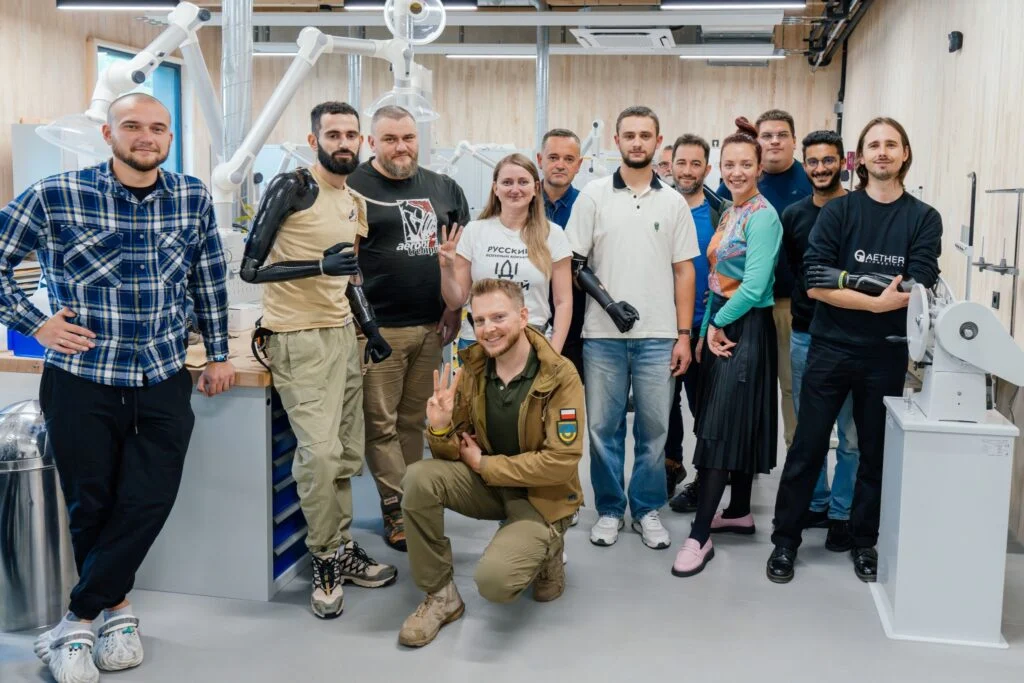
Our team at the Superhumans Center in Lviv
Building a new network in an unfamiliar sector
By that point, our presence and contact network in Ukraine were already strong. Over the previous two years, we had delivered approximately €10 million in equipment and aid to military units and civilians while working with authorities across multiple cities and oblasts.
Healthcare, however, was new territory.
Once we had exhausted what could be learned online, we directed our questions to the people most accessible to us: Ukrainian soldiers, local politicians and, of course, Ukrainian refugees in Poland - more than 35,000 of whom we had supported by then.
Through them, we reached veterans: their wounded brothers, husbands, fathers and sons. Unsurprisingly, several active-duty service members whom we had supplied with equipment only a year earlier were now recovering in hospitals in western Ukraine or receiving specialist treatment in Poland.
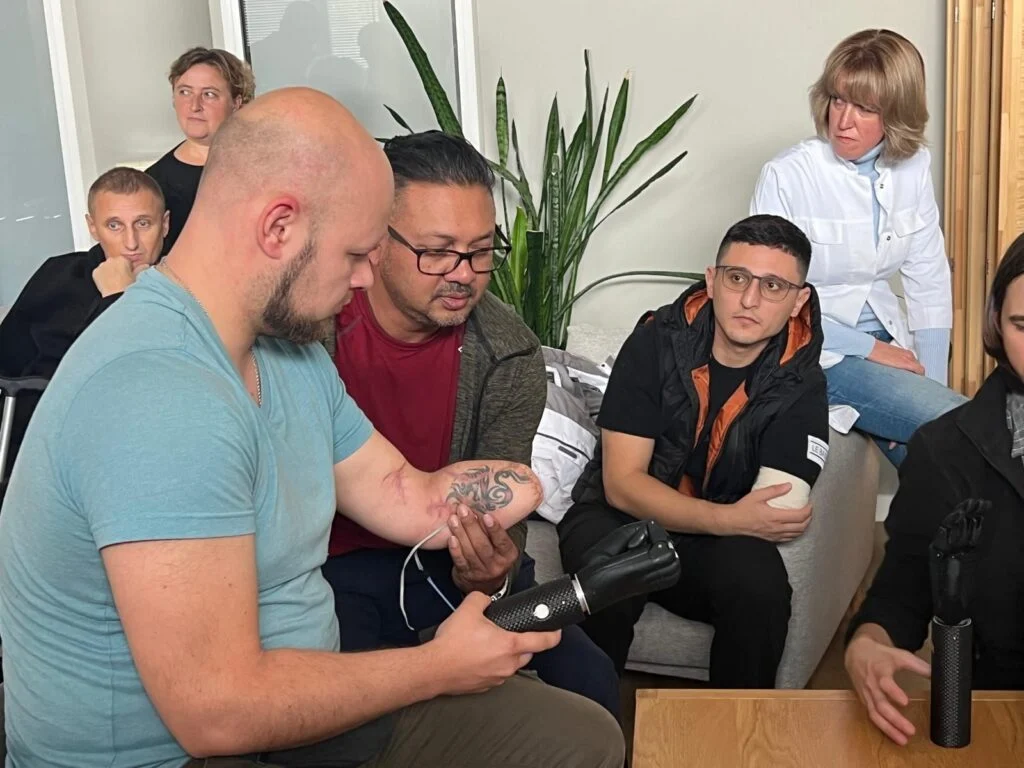
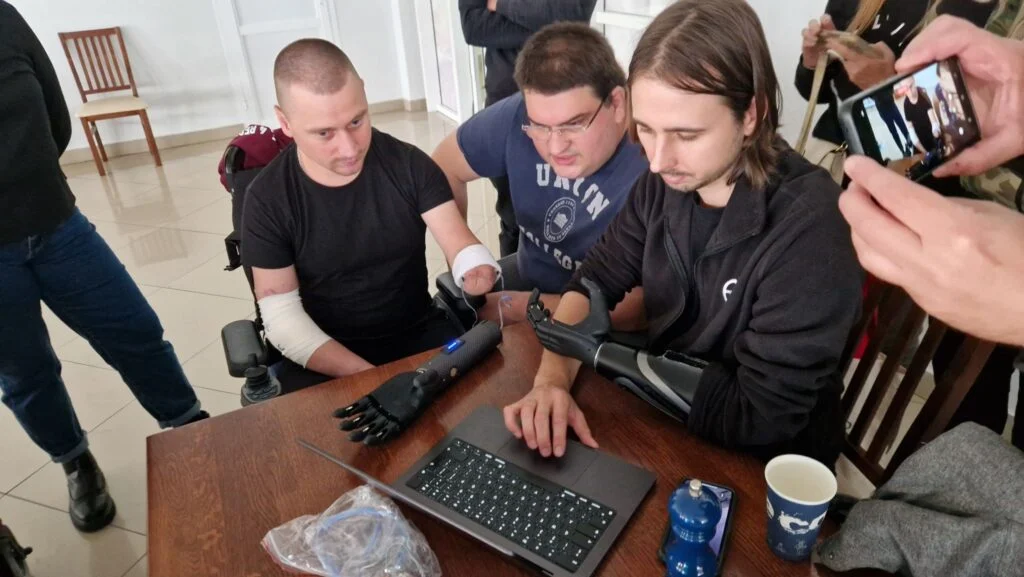
Ukrainian veteran testing the Zeus hand in Poltava
Once we understood the landscape we were about to disrupt - or at least encroach upon - we mapped the challenges. And there were many: compliance hurdles, potentially impossible public-procurement procedures, red tape and the possible rejection of a non-Ukrainian brand by both users and medical professionals.
We approached each risk individually, with caution and proper due diligence. We made sure our decisions were not based solely on official procedures, self-reported market claims or Google's guidance.
We checked legal questions with Roman, clinical assumptions with prosthetists and medics, and demand with veterans and clinics. We also screened prospective partners and kept a live risk register.
Everything had to be adapted to the Ukrainian audience, taking account of cultural differences, wartime sensitivities and possible hostile reactions from established competitors.
Alongside the commercial work, we carried out partner due diligence and maintained a live risk register covering regulatory, operational, financial, reputational and security risks.
In a market shaped by wartime urgency, donor funding and intense competition, a promising introduction is not the same thing as a reliable partner - and an impressive title or institutional affiliation is not a substitute for verifying incentives, capacity and track record.
We were equally careful not to treat wounded veterans as marketing assets. Any ambassador model had to respect clinical suitability, informed consent, privacy and the dignity of the patient. The human benefit came first; communications value could only follow.
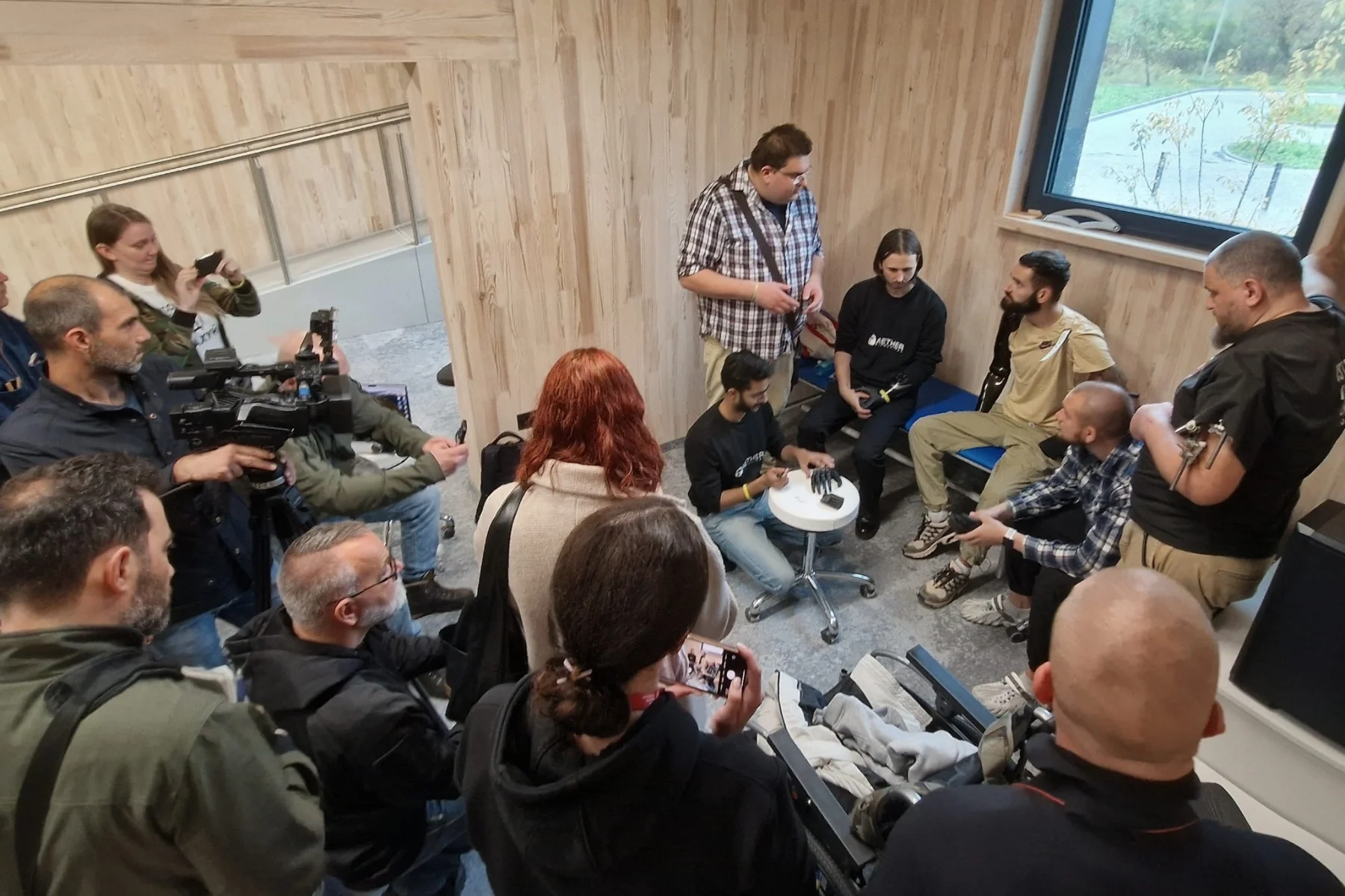
Presenting the Zeus to Ukrainian and Polish media
When the plan met wartime reality
We initially assumed that preparation would be the most difficult phase. We were wrong.
No amount of research and planning can turn market entry into a highly competitive wartime sector into the smooth execution of a Gantt chart.
Even before our first physical mission, reaching the right stakeholders - from hospital management to local-government officials - turned out to be a nightmare.
Response times and agreed next steps were often disrupted by air raids, staff shortages and emergencies. We planned around that reality and avoided treating delayed replies as a lack of interest.
Working on the ground
Once we had addressed the relevant legal and administrative requirements and developed a solid understanding of the procedures, risks and obstacles ahead, we began preparing to start the work on the ground.
We mapped the relevant hospitals, clinics and rehabilitation centres and planned our first field mission.
For operational-security and NDA reasons, we cannot disclose the details, but the overarching idea was simple. We would provide several advanced prostheses free of charge to carefully selected patients in different parts of the country. In return, we would ask them to become brand ambassadors.
The hospitals and clinics conducting the fittings would become our first partners and, eventually, clients - gateways to the wider Ukrainian market.
Ukrainian veteran testing the Zeus hand
But again, when it comes to wartime operations, the gap between a plan and reality could fill the gaping hole where Putin's heart should be.
In practice, the first mission went remarkably well. There were no major hiccups, no casualties - seriously - despite spending a night in blacked-out Kharkiv, just 40 kilometres from the Russian border, and not even any cancelled meetings or significant cultural misunderstandings.
Everywhere we went, we were welcomed like saviours. This was, mind you, before the Kremlin-inspired Polish far right managed to turn half of Polish society against neighbours who were heroically fighting and dying for their own freedom - and for the security of the EU.
Meetings with senior officials, signed letters of intent, agreed next steps and a week of safely navigating a war zone - no problems whatsoever.
The difference between access and conversion
Actually following up and converting that momentum into a functioning route to market was another matter - and not always for lack of trying.
In some cases, Ukraine-specific "personal-interest obstacles", as we shall diplomatically call them, made us question whether a professional business relationship was possible at all.
In others, procedures we understood perfectly on paper - and which had supposedly worked for other companies - proved completely dysfunctional for no apparent reason. Instead of cutting through the red tape, someone simply replaced it with a new roll - Powertape rather than Scotch.
After a week of high-level meetings, extraordinary welcomes, hope and enthusiasm, we had secured support not only from Ukrainian stakeholders but also from Polish government institutions. Deputies of the Verkhovna Rada even bestowed largely undeserved decorations upon us.
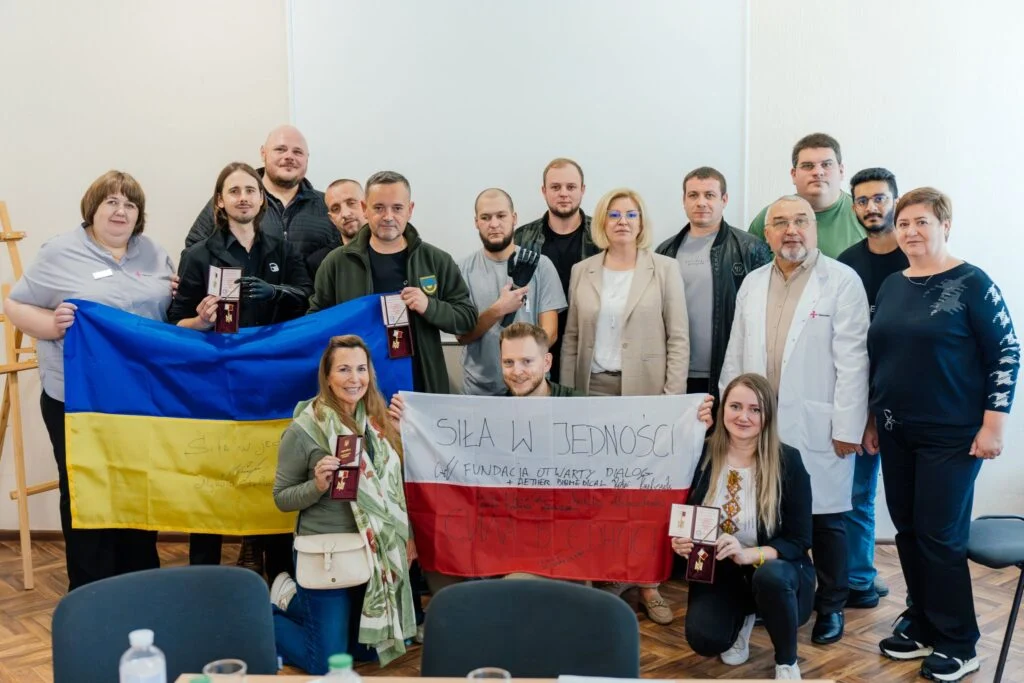
Receiving the "Power of Mercy" order
We returned to Poland with remarkable memories, life-changing experiences and knowledge that could never have been acquired through desk research. This included discovering the excellent burgers sold at UPG petrol stations.
The first mission produced strong interest but no reliable sales route. It showed where the original plan failed and gave us the evidence needed to change it.
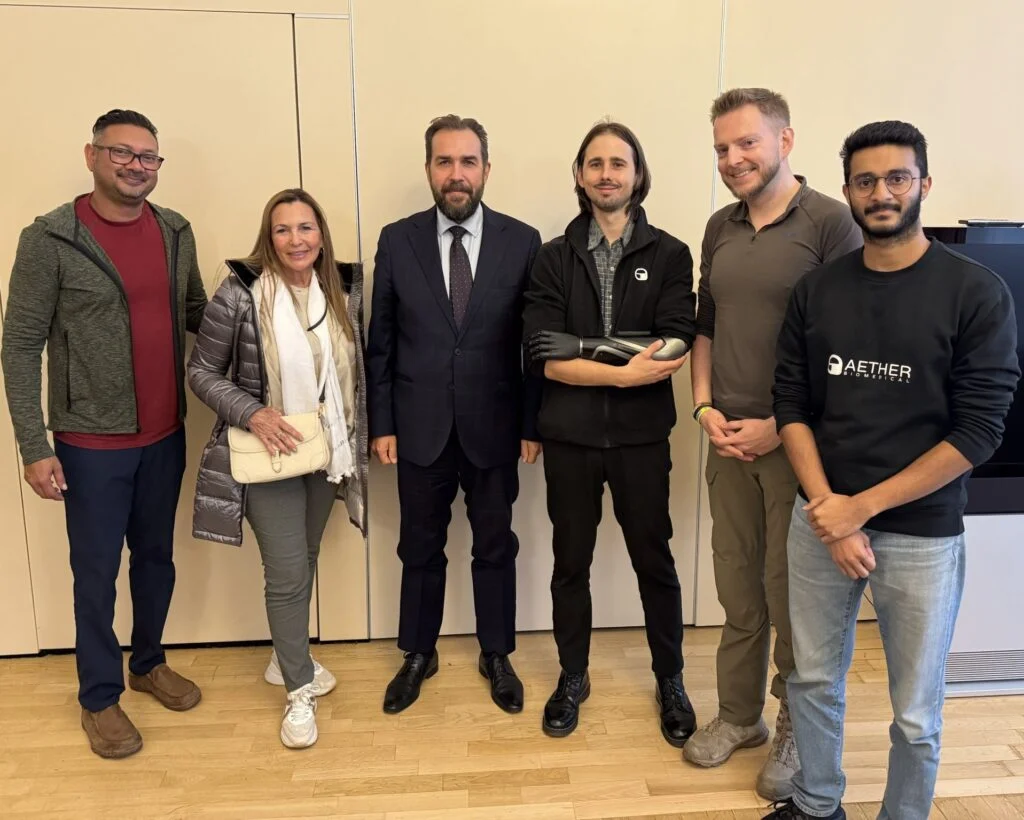
Meeting with Poland's Ambassador to Ukraine in Kyiv
Changing the plan
After several more months of discovery and a second pass at the business-development plan - in other words, a badly needed reality check - we agreed with our partners at Aether to pivot.
We focused not only on the most promising leads but also on a specific new market-access route that would:
bypass the most obstructive administrative red tape;
avoid disrupting the existing market enough to trigger unnecessary hostility or defensive reactions;
ensure that our Ukrainian partners - not merely "clients" - would benefit substantially from the cooperation; and
make it clear why those benefits could not be replicated by simply working with another manufacturer.
In practical terms, the pivot meant building several routes to customers instead of depending on one institutional decision.
Unbroken Center in Lviv
Rather than waiting for one central decision to unlock the entire market, we developed several mutually reinforcing routes: reference fittings through trusted non-profit centres, validation within a public hospital, formal cooperation with commercial clinics, access to the state reimbursement pathway and, eventually, a permanent local presence through a Ukrainian subsidiary and locally recruited staff.
Each part reduced the risk of the next.
Successful fittings created clinical evidence and patient trust. That evidence strengthened conversations with hospitals and reimbursement authorities. Institutional validation made commercial clinics more willing to cooperate. The local entity and team then turned individual fittings into a repeatable route to market.
The new approach was narrower geographically, more focused commercially and based on much more realistic assumptions.
The second field mission delivered everything we had aimed for - and more.
We would, of course, be dishonest to suggest that the MSSG team achieved this alone. Aether had a strong product and a committed team; Ukrainian prosthetists, hospitals, non-profit organisations, officials and patients did the work that ultimately mattered most.
Our role was to connect those elements, challenge assumptions, remove obstacles and help turn an innovative product into a functioning route to market.
The numbers
Because what every prospective client eventually wants is numbers:
As of 2024:
30,000 - the lowest estimate of the total number of upper-limb amputations in Ukraine.
120 - the approximate number of bionic hands fitted annually in Ukraine. The procedures were being performed by only two private clinics.
80 - the number of Zeus hands fitted in Ukraine by that point, all privately sponsored and fitted through one Western-funded clinic.
0 - the number of bionic prostheses reimbursed - or eligible for reimbursement - by the Ukrainian state at that time.
As of late 2025:
170 Zeus hands fitted through non-profit prosthetic centres.
30 Zeus hands fitted at the public Halychyna hospital in Lviv, all fully reimbursed by the Ministry of Social Policy under Resolution No. 321, with at least 100 fittings planned for 2026.
10+ commercial prosthetic clinics signed formal cooperation agreements and fitted 60 patients, all with full reimbursement.
1 Ukrainian subsidiary - a TOV - registered by Aether, with local staff recruited with our support.
As of 2026, Aether Biomedical is one of the two leading manufacturers of advanced hand prostheses operating in Ukraine - and is on a clear path towards becoming number one.
What we learned
The main lesson was simple: market entry into wartime Ukraine cannot be managed remotely as a conventional export exercise.
It requires local intelligence, institutional access, repeated field validation and the willingness to abandon a perfectly good-looking plan when reality proves it wrong.
Our original strategy did not survive contact with the market. Fortunately, it did not have to.
The objective survived - and the adapted strategy delivered.
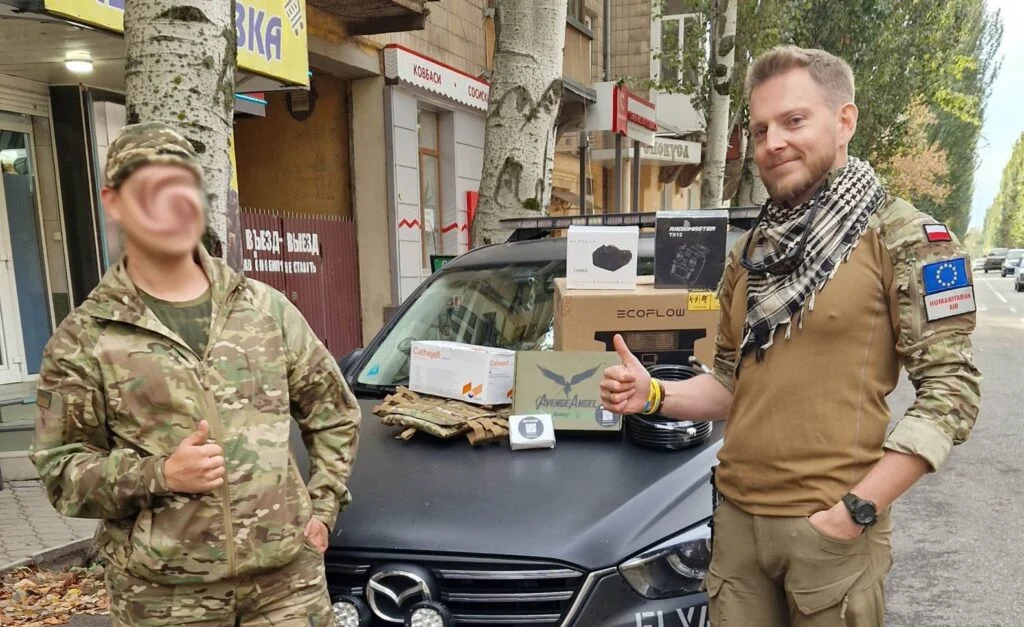
Delivering some much-needed dual-use equipment to a Polish ZSU defender on the way never hurts
From promising technology to a credible field-validation strategy
The challenge
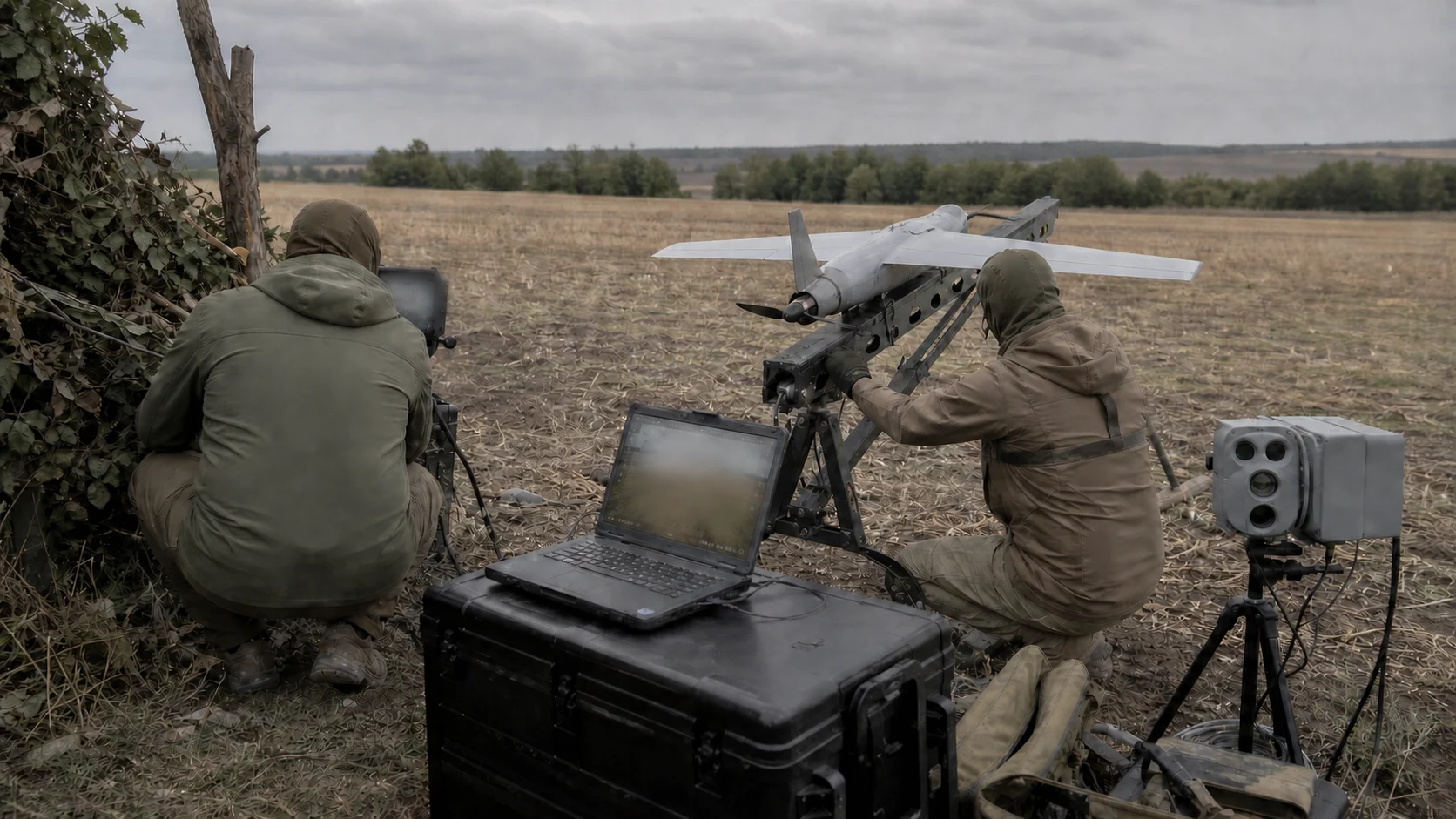
We were approached by two European defence-tech companies developing very different products: one a software layer designed to detect unreliable sensor data in autonomous systems, the other an advanced interceptor intended to counter aerial threats.
Both technologies were genuinely interesting. Both teams also faced the same underlying problem: the commercial story had moved faster than the available evidence.
They knew, broadly, what their technology could do. What they did not yet know was where it would create the most value, which users would actually care, what had to be demonstrated before anyone could credibly discuss procurement, and whether Ukraine was really the right first market.
We could have done the easy thing: translated their decks, added a Ukrainian flag and started emailing military units. It would have been fast. It would also have been irresponsible.
What had actually been proven
The defence sector has its own hierarchy of evidence.
In defence, interest, demonstrations, field tests, operational use and procurement are separate stages. We established which stage each company had actually reached and what evidence was still missing.
We began by going through the companies’ assumptions and claims one by one. Which capabilities had already been demonstrated? Which existed only in simulations? Which depended on integration with another system? What would a user need to see before trusting the product? And what evidence would an informed investor expect before accepting claims of product-market fit?
Finding the actual use case
For the sensor-integrity product, we narrowed an extremely broad autonomous-systems proposition to the platforms where corrupted but apparently plausible sensor data could cause the greatest operational and financial damage.
That meant prioritising reusable, expensive and sensor-dependent systems - initially those relying on cameras, electro-optical sensors or radar - rather than presenting the technology as a universal answer to every problem involving autonomy, AI or electronic warfare.
For the interceptor project, the issue was different. The company had to prove not simply that its technology could fly, but that the complete system could detect, track, engage and successfully intercept a relevant target under realistic conditions. Cost per engagement, integration, operator requirements, reliability and production scalability mattered just as much as headline performance.
In both cases, we identified the weakest links in the proposition before approaching potential users.
Building evidence in the right order
We then designed a validation pathway for each product: what needed to be tested, in what order, with whom and against which measurable criteria.
The sequence covered controlled demonstrations, technical integration, tests with prospective users, operational feedback and the evidence required to support a credible purchasing decision. We also mapped the manufacturers, integrators, military and civilian users, public authorities and industry partners who could play a role at each stage.
At the same time, our legal and defence specialists examined the less exciting but unavoidable questions: export controls, licensing, certification, codification, access to classified or operationally sensitive information and the legal structure of possible cooperation in Ukraine.
There is little value in arranging an impressive demonstration if the equipment cannot legally cross the border, connect to the target platform or enter the relevant procurement system.
A practical test and market plan
The result was not another generic market report or a spreadsheet containing hundreds of theoretically relevant organisations.
Each company received a prioritised route to validation and market entry: the most credible initial use cases, the evidence still missing, the right categories of partners and users, the order in which they should be approached and the milestones that needed to be achieved before making stronger claims to clients or investors.
For one company, we translated this into an Eastward-expansion strategy focused on Ukraine-facing manufacturers and integrators. For the other, we created a business-development campaign built around concrete technical milestones rather than premature promises of immediate military procurement.
We also helped reshape the language used in their commercial and investor materials. The objective was not to make the companies sound more impressive. It was to make them more credible.
The result
Both teams needed a narrower set of use cases and a concrete test plan.
By the end of the process, both had a clearer understanding of where their technology could genuinely compete, what still had to be proven and how to turn technical progress into evidence that users, partners and investors could trust.
Just as importantly, we identified assumptions that should not be repeated, market segments that were not worth pursuing yet and claims that needed to wait for actual test results.
In defence-tech, knowing what you cannot credibly promise is often as valuable as knowing what you can sell.
From an overlooked factory to an international photo feature
Weapons testing ground, undisclosed location
The objective
We were approached by a privately owned Polish defence manufacturer that had never managed to break through into serious international media.
At first glance, this looked like a fairly standard media-relations assignment: find the right journalist, arrange an interview and secure some coverage.
But coverage for its own sake would not have solved the company’s real problem.
The manufacturer was preparing to enter a strategically important ammunition segment and already had contracts with foreign partners. Yet it had been unable to establish meaningful cooperation with its own country’s defence ministry.
That gap was damaging its credibility. If the company claimed it could become an important domestic supplier, prospective partners could reasonably ask why the Polish military did not appear interested.
The strategic objective was therefore much more specific: place the company within a serious international debate about European defence production and, through credible independent reporting, make its situation harder for Polish decision-makers to ignore.
Finding the right angle
At the time, Europe’s shortage of 155mm artillery ammunition had become a major political and security issue.
Russia could produce artillery shells at a rate European manufacturers were struggling to match. Existing stockpiles were alarmingly limited, governments were announcing record defence budgets and the EU was calling for a rapid expansion of domestic production.
Poland was particularly interesting. It was spending more of its GDP on defence than any other NATO member, while remaining heavily dependent on foreign suppliers and a state-controlled defence group that could not satisfy all of the country’s needs.
This gave us the real story.
We did not pitch a company wanting publicity or complaining that the government would not answer its calls. We pitched a wider contradiction: how could a frontline NATO country speak about rearmament and ammunition shortages while making it so difficult for a private domestic manufacturer to build new production capacity?
The company became the case study, not the entire story.
That distinction mattered. It turned a corporate grievance into a question of defence policy, industrial capacity and European security - subjects that an international newspaper could legitimately investigate.
Approaching the right journalist
Rather than distributing a generic press release, we identified the correspondent of one of the world’s most influential financial newspapers whose beat and recent reporting made him the right person for the story.
We used our existing European media network to establish direct contact and prepared a focused, evidence-based pitch around the policy contradiction.
The initial response was interested but cautious, as it should have been. Defence companies make ambitious claims all the time, particularly when they are seeking contracts, investment or government attention.
So we stayed on the story - politely, but persistently.
We provided enough background to show that the proposed article had substance: the wider ammunition shortage, Poland’s industrial structure, the manufacturer’s existing export relationships, the proposed expansion of production and the practical obstacles faced by private suppliers.
Just as importantly, we offered something that could not be delivered through a video call or a polished presentation: full access to the factory, its management and its industrial reality.
Preparing the evidence
Before the visit, we worked with the company to establish the main claims and supporting evidence: what could be stated as fact, what remained an ambition, which claims required supporting evidence and which subjects were likely to attract difficult questions.
The aim was not to script the executives or make them sound like media-trained politicians. It was to ensure that the company’s strategic message survived a proper journalistic examination.
We prepared the management for questions about production capacity, contracts, ownership, relations with the state defence sector and the credibility of the company’s plans. We also helped separate the strongest parts of the story from arguments that sounded convincing internally but would not withstand independent scrutiny.
This was especially important because the most effective narrative was also potentially risky. The company needed to explain why Poland’s defence-procurement system was failing to use private industrial capacity without sounding like a disgruntled contractor asking the press to fight its commercial battles.
The line had to be critical, factual and relevant to the public interest.
Turning a factory visit into editorial evidence
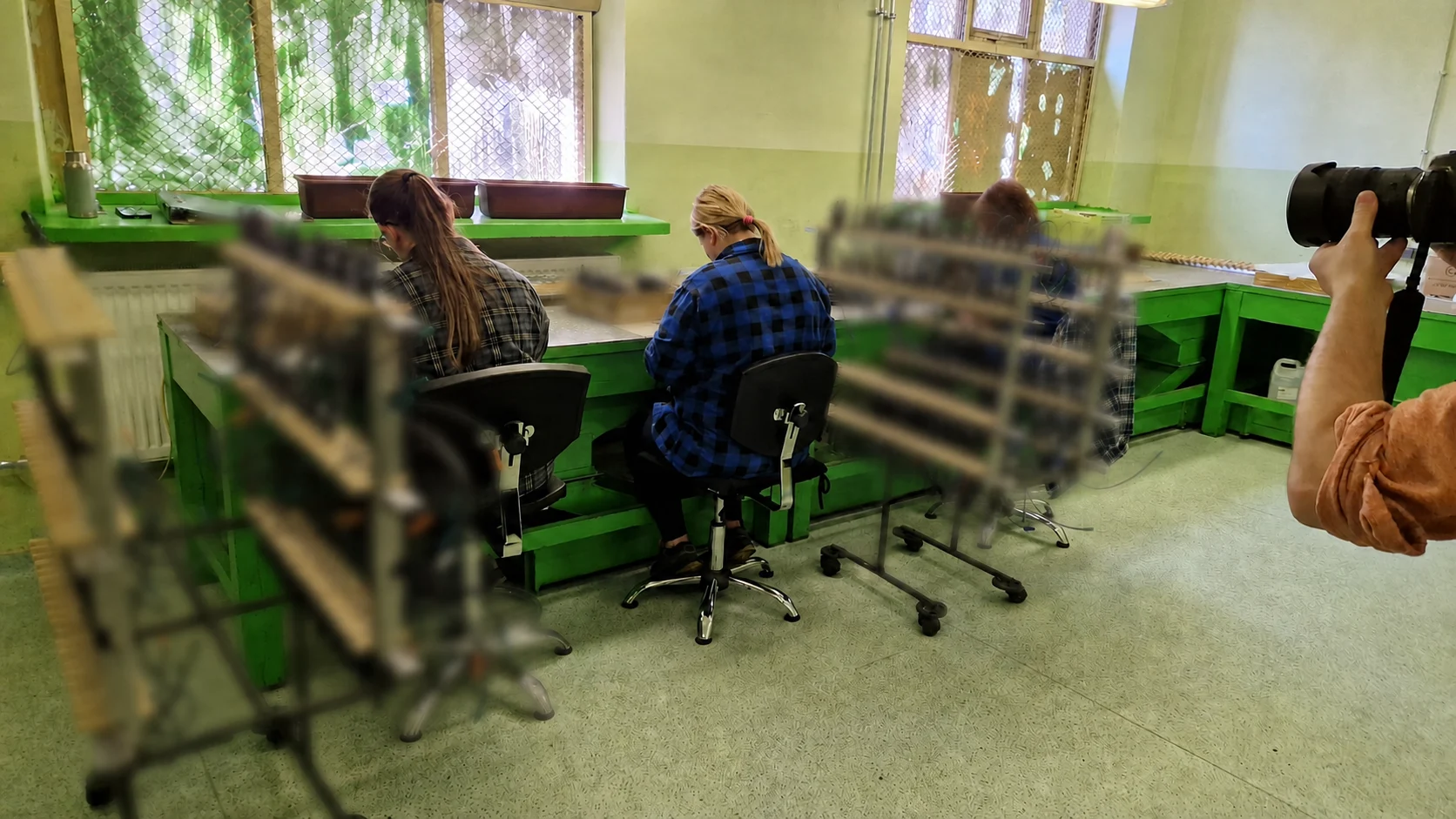
Defence manufacturing plant, undisclosed location
We coordinated a full-day visit by the correspondent and a photojournalist.
The day began with a structured briefing from the company’s leadership: its history, current activities, production plans and experience of dealing with Poland’s defence establishment. We then accompanied the journalists around the industrial site, giving them access to management, employees, production facilities and the less polished parts of the factory that showed both its potential and the scale of the investment still required.
We handled the practical coordination, kept the visit moving and translated much of the discussion into English. We also made sure that the photographer had enough time and access to create a genuine visual story rather than the usual collection of executives shaking hands beside a company logo.
Afterwards, we remained available for follow-up questions, factual clarifications and the verification of technical and commercial details. The journalist, of course, retained full editorial independence and sought additional views from government representatives and outside experts.
The journalist retained full editorial independence and checked the company's claims with government representatives and outside experts.
The result
The visit resulted in a substantial international feature examining Poland’s struggle to rebuild its defence-industrial capacity.
The manufacturer became the central case study in a much broader article about ammunition shortages, the position of private defence companies, the dominance of the state-controlled sector and Poland’s continuing dependence on foreign suppliers.
The piece was supported by extensive original photography from inside the factory, including portraits of company leadership and images of employees and production facilities. For a business that had never previously secured this level of international media attention, the scale and prominence of the coverage were significant.
More importantly, the article carried the intended strategic message without reading like a commissioned campaign: Poland could not credibly promise rapid rearmament while overlooking domestic manufacturers capable of contributing to it.
We could not force the defence ministry to cooperate with the company, and we would never promise a client that one article could produce a government contract.
What we could do was change the context in which the company was being judged. Its problem was no longer merely a private complaint made behind closed doors. It had become part of an international conversation about Poland’s defence readiness, industrial policy and credibility as a frontline NATO state.
That was the real objective from the beginning.
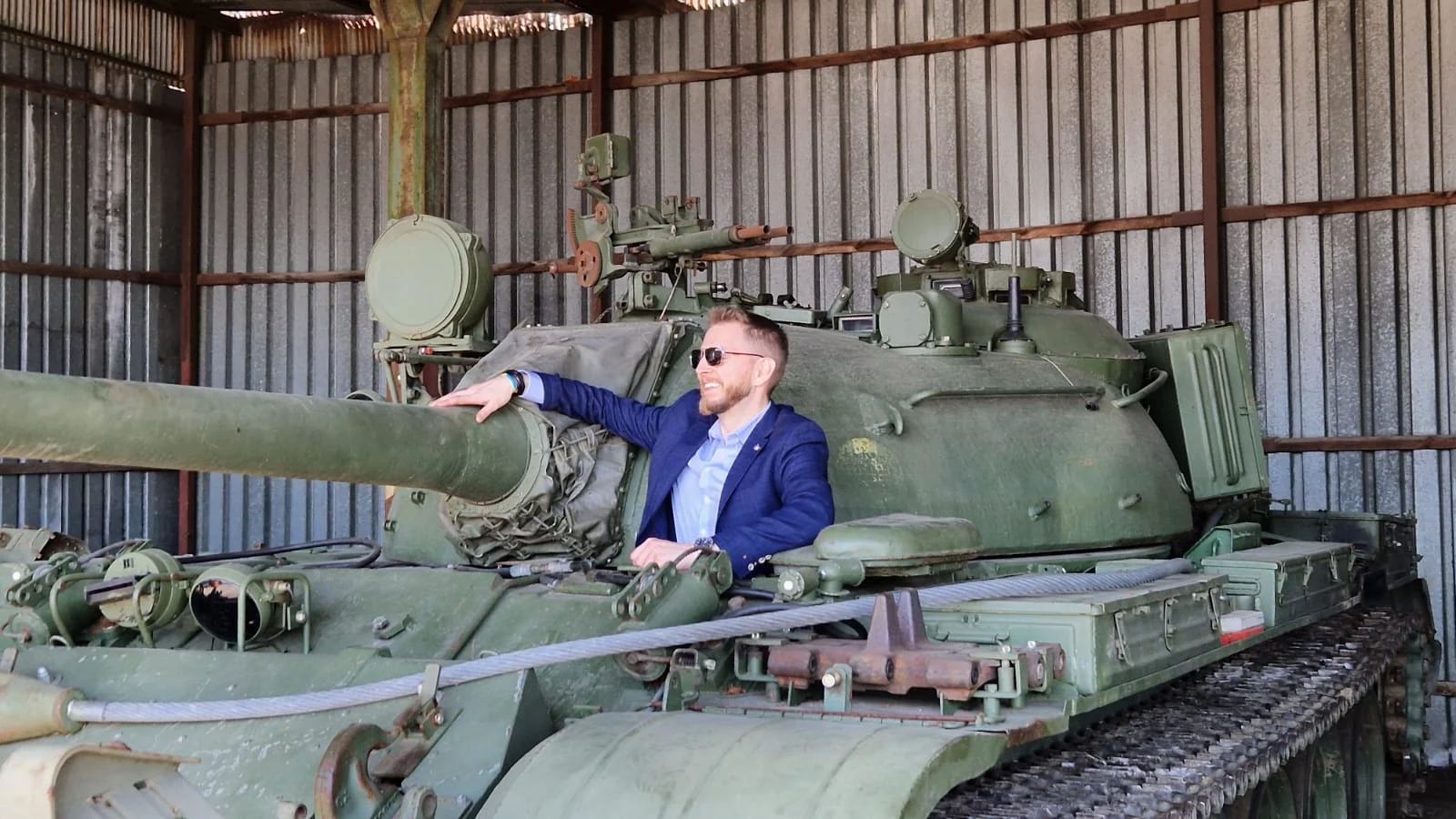
Wouldn't be a defence factory visit without a souvenir tank pic
What we checked before the investment
Independent technical and commercial validation
The investment question
A US investor asked us to assess a European defence-tech company developing an autonomous counter-UAS system. The company had an experienced team, a convincing story and what appeared to be valuable access to Ukraine.
It also made claims that were difficult to evaluate from a deck or data room: long-term use by a Ukrainian military unit, operational learning from the front, a strong technological advantage and a large addressable market.
We classified the main claims as verified, supported only by company materials, plausible but unverified, or incomplete and contradicted.
Checking the evidence
We started by separating every important claim into four categories: independently verified, supported by company materials, plausible but unverified, and contradicted or incomplete.
That sounds obvious. In defence-tech it is surprisingly rare. A product can be physically present in Ukraine without being used operationally. A unit can test equipment without adopting it. A successful interception can prove that something worked once without proving repeatability, reliability or an affordable cost per effect. Donated hardware is not the same as a commercial order.
We reviewed the deck, technical documentation, test history, commercial assumptions and the language used with investors. We looked for the missing links between prototype, integrated system, operational performance and procurement.
Checking the Ukrainian reality
The company referred to a Ukrainian military user, so we did not stop at asking whether the relationship existed. We prepared the questions an investor actually needed answered: what version of the system had been supplied, how often it was used, under what conditions, what results were recorded, which failures occurred, what the unit wanted changed and whether it would pay for further systems.
We also examined the route into the Ukrainian defence ecosystem. The company believed it had to wait for codification and establish a Ukrainian subsidiary before engaging with the Brave1 cluster. We checked where that was accurate, where it confused different procedures and where programmes for foreign manufacturers could provide an earlier route to testing.
This mattered because "the bar keeps moving" can describe a genuinely fast-changing battlefield. It can also hide the absence of a defined validation plan. We wanted to know which bar had moved, who had moved it and what measurable milestone would satisfy the user today.
Competition, economics and the complete system
We mapped direct and adjacent competitors in Ukraine and internationally. The relevant comparison was not only another air-to-air interceptor. It included electronic warfare, gun-based systems, ground-launched interceptors, cheaper drone interceptors and the option of accepting some losses rather than paying too much to prevent them.
We therefore looked beyond headline performance. Detection and tracking, command-and-control integration, operator workload, launch availability, weather tolerance, electronic-warfare resistance, maintenance, production capacity and cost per successful engagement all affected the commercial case.
A technically impressive aircraft is not yet a deployable counter-UAS system. The investable product is the complete kill chain, supported by repeatable data and a credible manufacturing plan.
Assessing the team
Early-stage defence investment is partly a bet on whether the team can close the gaps that due diligence uncovers. We assessed how clearly the founders distinguished fact from ambition, whether they understood Ukrainian procurement realities and whether uncomfortable feedback led to better questions or defensive answers.
We also looked at the company's ability to turn field access into structured learning: documented test protocols, version control, failure analysis, user feedback, prioritised engineering changes and evidence that the next test addressed the previous test's weaknesses.
The result
We delivered a competitor map, a claim-by-claim evidence table, a Ukraine procurement analysis, questions for management and military users, and a milestone plan covering operational validation, codification, integration, cost and production.
We prepared a competitor map, a claim-by-claim evidence assessment, a Ukraine market and procurement analysis, a set of questions for management and military users, and a milestone plan covering operational validation, codification, cost, integration and production readiness.
The company still had a potentially valuable technology and credible access to users. But the investment case depended on converting that access into measurable evidence: repeatable results, independent user feedback, a defined route to procurement and an honest understanding of the alternatives already competing for the same budget.
The investor could then see which claims were already credible, which depended on further tests and what evidence should be required before the next investment decision.
#EUCanBeFireSafe: a European campaign after Grenfell
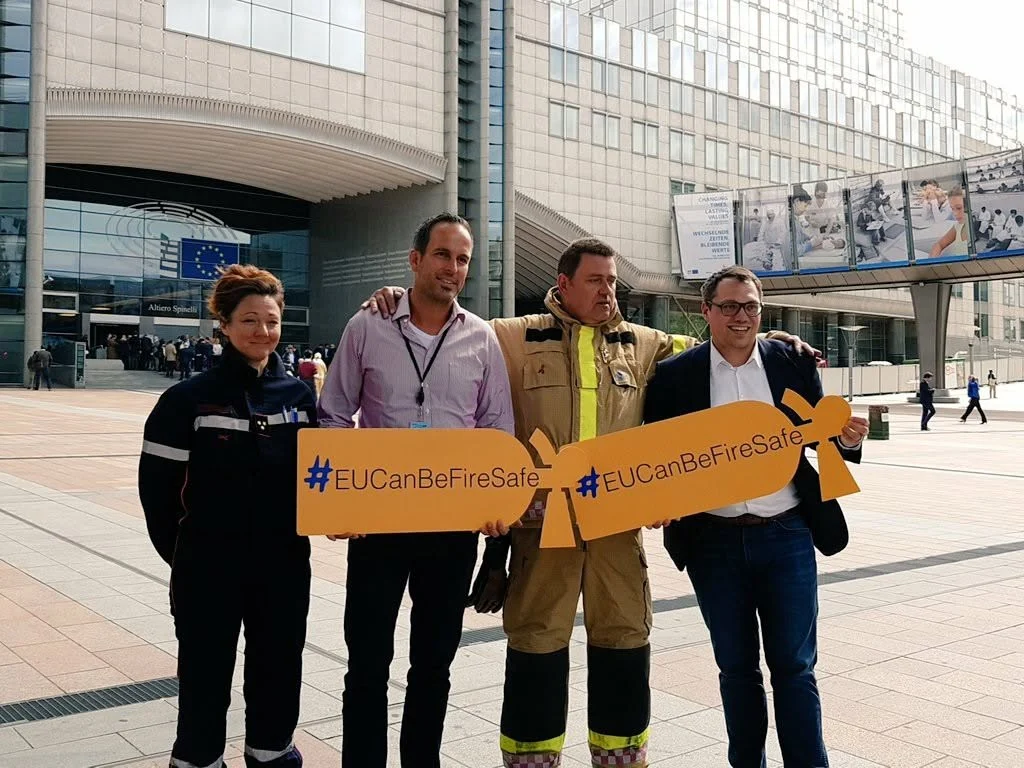
European Parliament, Brussels
The challenge
On 14 June 2017, a fire tore through Grenfell Tower in London and killed 72 people. It also exposed problems that fire-safety specialists had warned about for years: combustible facade systems, tests that did not reflect how complete facades behaved in a real fire, and too little attention to toxic smoke.
Fire Safe Europe wanted to keep those problems on the political agenda after the news cycle moved on. The association asked the campaign team our founder worked with to press for an EU response.
That was not as straightforward as it may sound. Building safety remained largely a national responsibility, while parts of the construction industry had considerably more lobbying money than the organisations calling for stricter rules.
We needed demands that the EU could actually act on, support from several political groups and a public campaign that people could understand without first reading a technical report.
Working with Fire Safe Europe and fire-safety specialists, we centred the campaign on three practical demands:
full-scale tests showing how complete facade systems behave in real fires;
tests and clearer information on toxic smoke produced by construction materials;
a coordinated European strategy for fire safety in buildings.
Before anything appeared outside Parliament, we did the less visible work. We arranged dozens of individual meetings, identified supportive MEPs across political groups and worked out which part of the European Commission could take the issue forward.
We also organised an informal reception in Parliament where firefighters and technical experts could speak directly to policymakers. Statistics were useful, but a firefighter describing what happens inside a smoke-filled high-rise building made the problem much harder to treat as an abstract regulatory discussion.
Bringing firefighters to Parliament
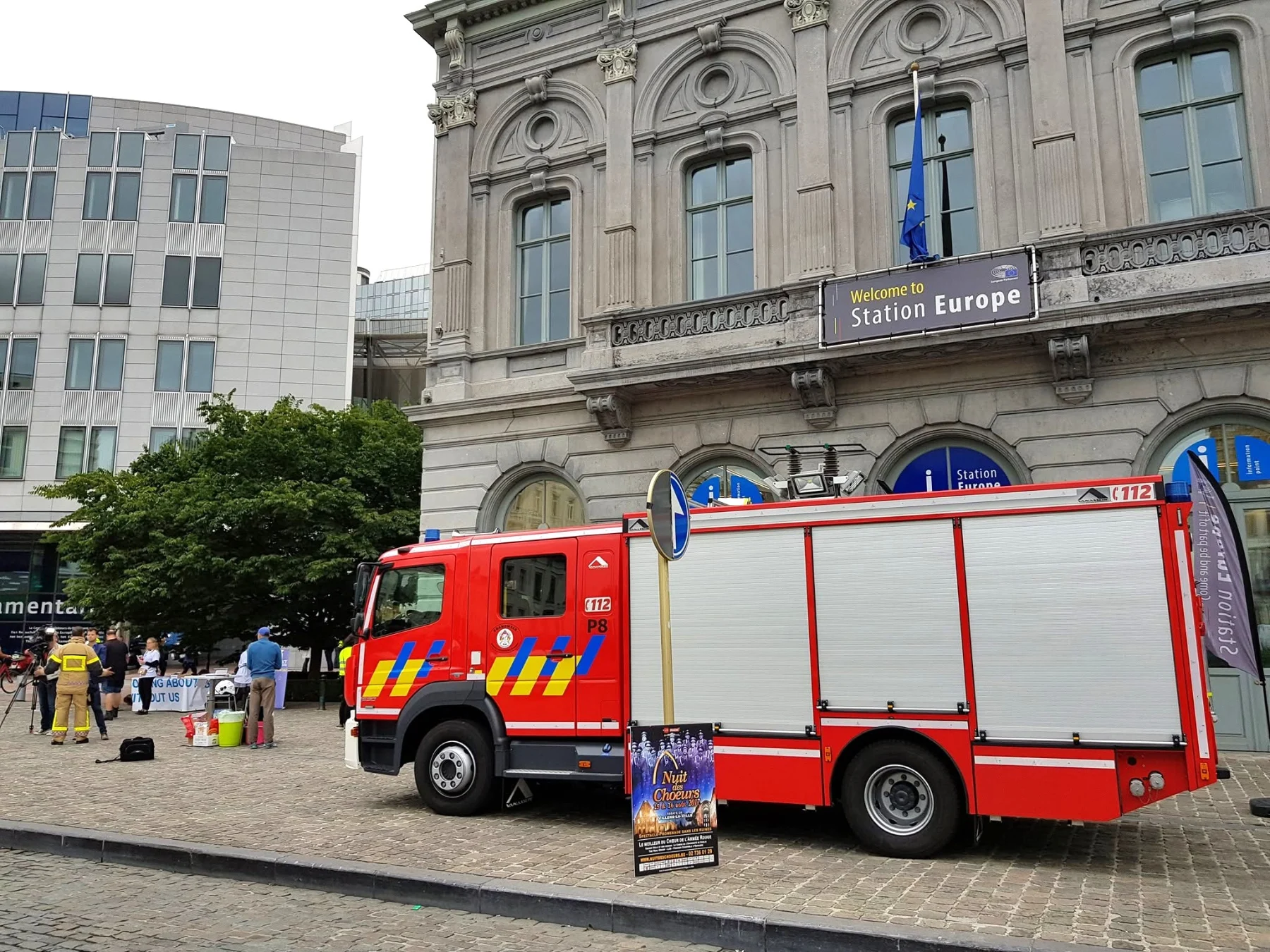
On 6 September 2017, firefighters from several European countries gathered outside the European Parliament in Brussels. We worked with firefighters’ organisations to bring their representatives to Brussels in uniform and arranged for a fire engine to stand outside Station Europe.
The campaign used large yellow cardboard fire extinguishers carrying the hashtag `#EUCanBeFireSafe`. They were deliberately simple. In photographs and social-media posts, the message had to be clear before anyone read the accompanying text.
Firefighters spoke to MEPs, officials and journalists about toxic smoke, fast-moving facade fires, occupational cancer and the limits of existing testing methods. Politicians posed with the campaign signs, but the event went beyond a photo opportunity. It gave firefighters direct access to the people considering the issue and gave journalists credible specialists to interview on the spot.
At the same time, we promoted the campaign online, approached the media and directed supporters to a public petition calling for EU action.
The final push
More than 1,000 people signed the petition.
On 12 September, the campaign held a candlelight vigil at the European Parliament in Strasbourg to remember the victims of building fires. The following day, Parliament held its first dedicated plenary debate on fire safety in buildings.
Twenty-nine MEPs took the floor. Speakers from different political groups called on the European Commission to improve facade testing, address smoke toxicity and coordinate work that had previously remained scattered between national authorities.
Commissioner Elżbieta Bieńkowska responded by announcing a new Fire Information Exchange Platform. Its purpose was practical: to bring national authorities, firefighters, experts and industry representatives together to exchange evidence and identify measures that could improve fire safety across Europe.
The platform held its first meeting on 16 October 2017. Representatives of 25 EU member states and 25 European stakeholder organisations took part.
What changed
No new European building code appeared overnight. The immediate result was institutional: fire safety entered formal EU work, with a Commission-led platform, a dedicated parliamentary debate and a public record of commitments that could be followed up.
The campaign also gave firefighters a direct voice in Brussels and Strasbourg. They were no longer being quoted only after a disaster. They were speaking to policymakers about prevention, testing and the risks they faced in their own work.
Later that year, `#EUCanBeFireSafe` received two European Public Affairs Awards: one for lobbying the European Parliament and another for the best NGO campaign.
What we learned
Public attention creates a short window. It does not provide a policy plan.
The campaign worked because it connected three things: specific measures the EU could take, sustained political work inside the institutions and public actions that made a technical problem visible.
The fire engine and the yellow cardboard extinguishers produced strong photographs. Their real value came from the work already done behind them: the meetings, the political support, the firefighters willing to tell their stories and the clear demands that decision-makers could act on.
Most importantly, the campaign treated Grenfell with the seriousness it required. The victims were not used as campaign decoration. Their deaths were the reason the institutions could not be allowed to put the issue aside.
This case study covers work carried out in 2017 by MSSG’s founder as part of the Brussels public-affairs team engaged by Fire Safe Europe.
Buldog Team: bringing new members to an old-school Warsaw club
The challenge
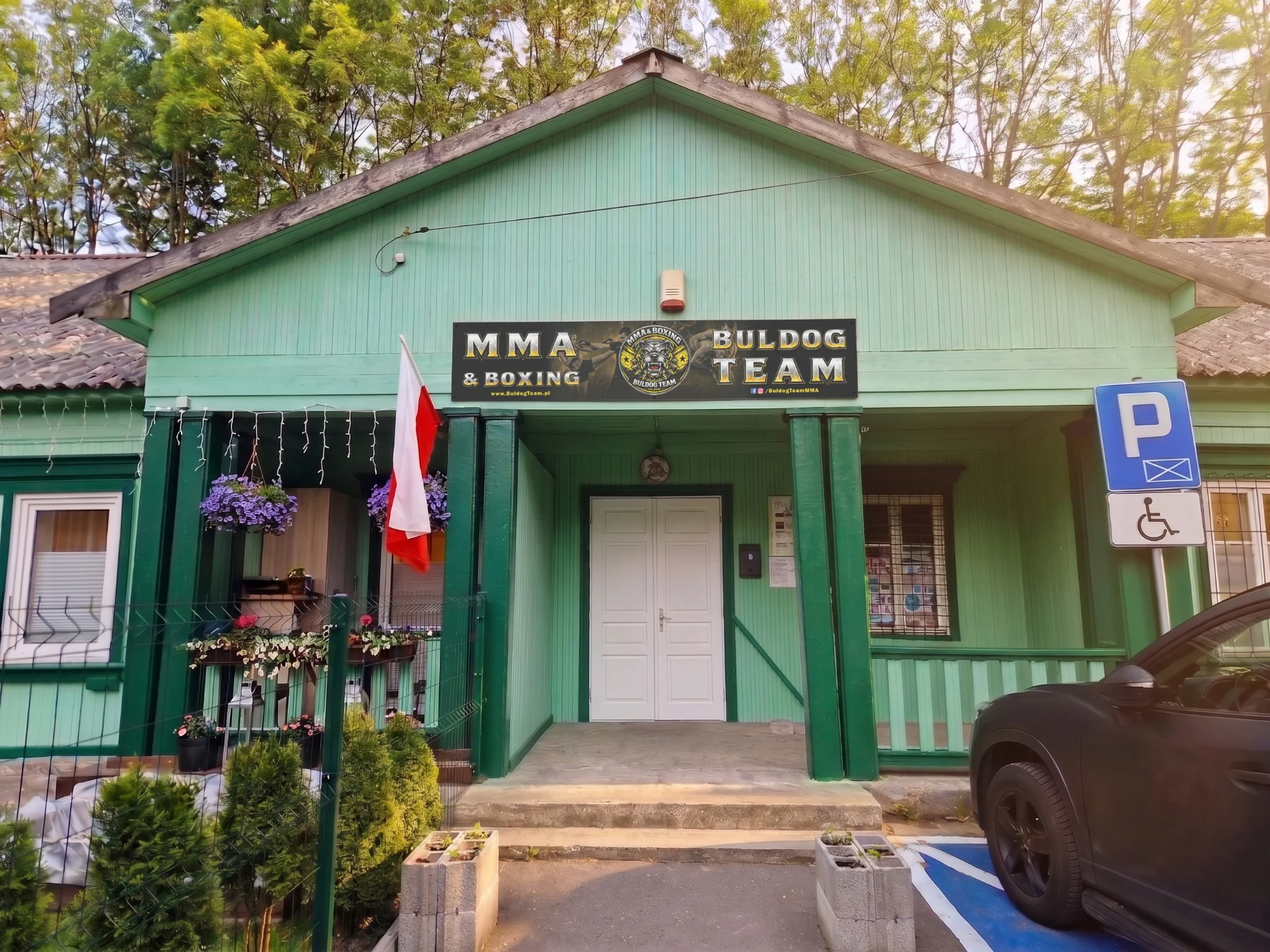
Buldog Team is a small martial arts club in Warsaw’s Bemowo district, led by coach Jacek Gawor, now in his seventies. It had an experienced coach, a committed group of regulars and years of sporting history. It also had fewer and fewer people coming through the door.
The club was showing its age. Its website looked like it had barely changed since the early 2000s. There were no Facebook or Instagram profiles, and very little promotion. People who might have enjoyed training there had little chance of finding it.
We took on the project pro bono, starting with how the club presented itself and continuing through to recruitment, fundraising and ongoing communications.
What we did
We began with a new visual identity. We redesigned the logo and put it on a range of club clothing. Profits from clothing sales paid for a new physical sign and banners, giving the club a way to fund visible improvements through its own community.
The next question was how to talk about the place. Trying to make Buldog Team look like a glossy fitness chain would have been unconvincing. Its appeal was much more personal: an old-school training room, a coach with decades of experience and a club where people knew each other.
We built the positioning around that character. The modest premises and veteran coach became part of an honest explanation of what members could expect. For someone tired of anonymous gyms, this was a reason to come and try a session.
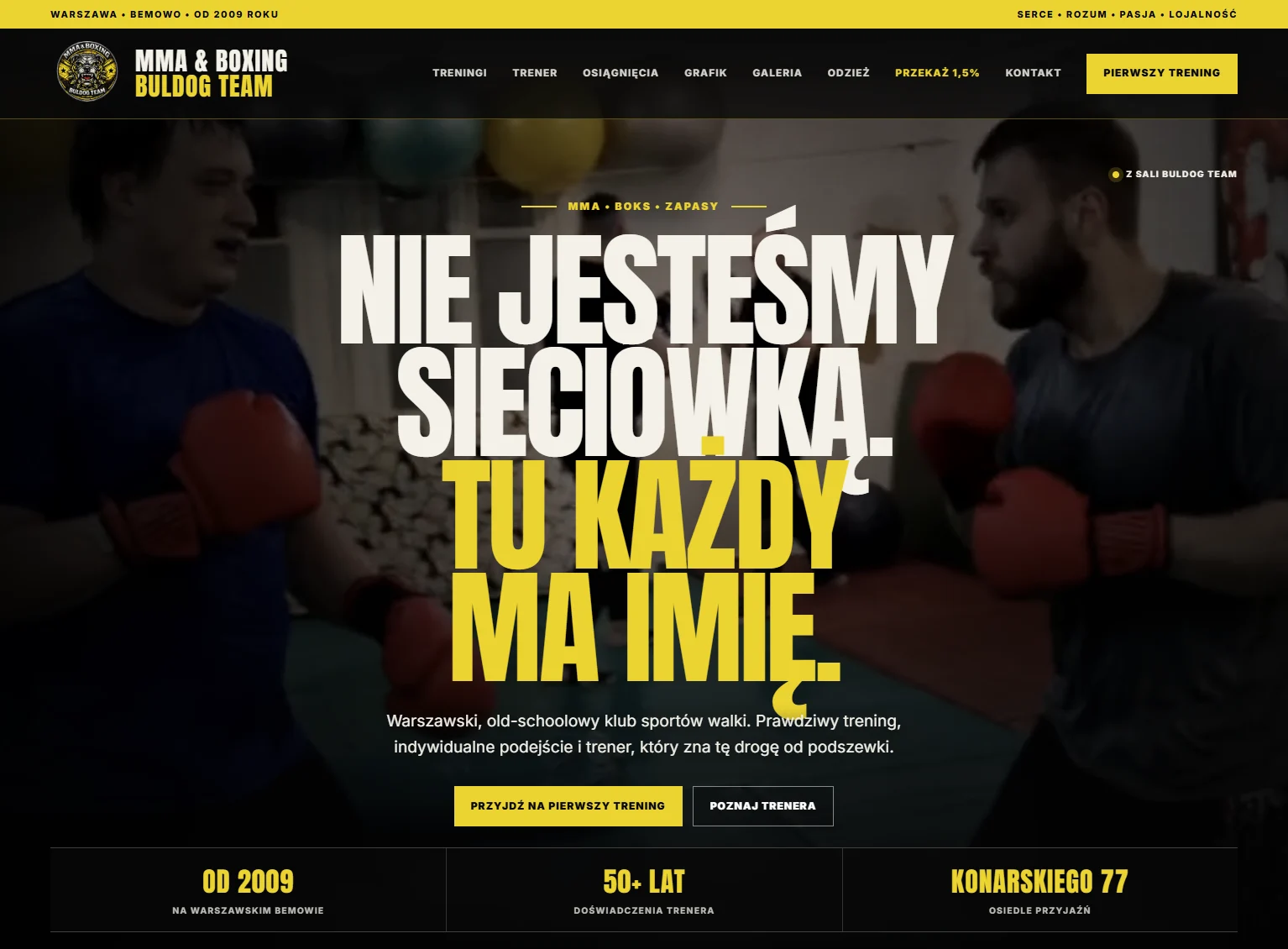
We created Facebook and Instagram profiles and built a new website in the club’s yellow-and-black colours. Training footage showed visitors the actual room and people. Clear information about classes, the timetable, the coach and the first visit made it easier to take the next step. The site also covered the club’s activities for people aged 50 and over.
Then we went looking for prospective members. We promoted the club in relevant Facebook groups, with messages aimed at people who could realistically come and train. Alongside recruitment, we ran a separate campaign encouraging supporters to direct their 1.5% Polish income-tax allocation to the club, supported by a dedicated page explaining how.
For ongoing social media, we developed recurring series covering MMA, boxing, wrestling, kickboxing and BJJ, alongside fitness for people over 50 and stories from the club’s history. The content gives readers something useful: an explanation of how a round is scored, a difference between competition rules, or a sporting achievement worth knowing about.
We research the material, check the sources and prepare separate Facebook and Instagram versions with matching branded graphics. Publications are planned a week ahead, with parts of the scheduling handled automatically. The tone stays informal and recognisably the club’s, including a regular sign-off invoking “the Force of Coach Jacek”.
Redesigned website, www.buldogteam.pl
Taking the coach onto gym screens
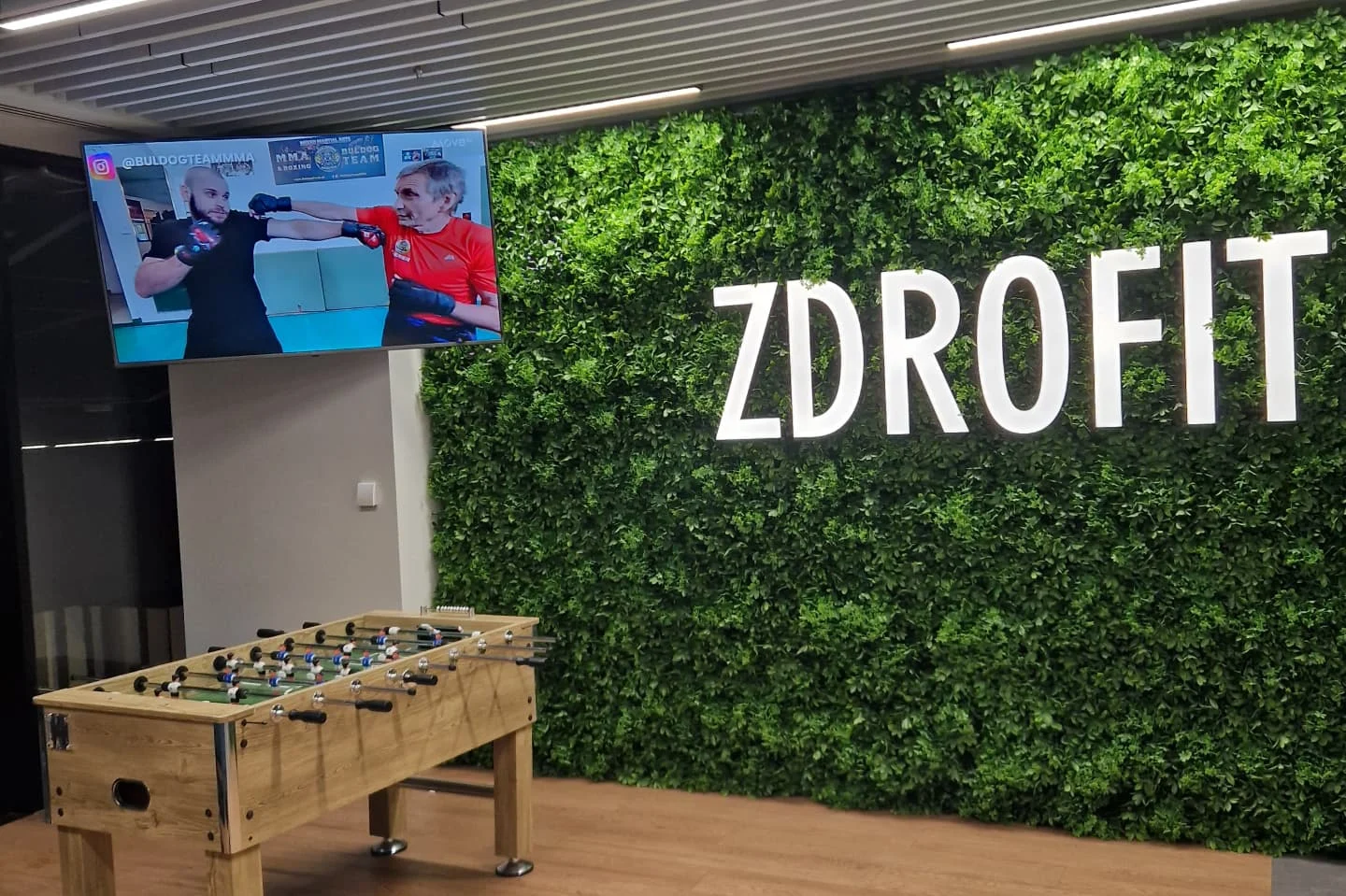
We also secured a content partnership with MoveTV, which distributes video programming to a network of 1812 screens in 353 fitness clubs and gyms.
The agreement gives Buldog Team free airtime for an ongoing series of short educational videos. The first batch of 20 clips, produced by MSSG, was filmed with the coach and club members, covering four types of martial arts.
Each film offers a few minutes of practical instruction. A club banner in the background carries the name, website and social media details. This gives the coach a much wider outlet for his experience and creates an additional way for people to discover Buldog Team without the club having to buy airtime.
The episodes started airing in October 2026, with one being displayed each hour. The contract has no end date and the videos will be displayed as long as the club keeps producing them.
Buldog Team educational video displayed in Zdrofit Varso Tower in Warsaw
The result
Interest in the club and new registrations are now growing, reversing the earlier decline.
The clothing sales have funded new signage and banners. The club has a consistent identity, a new website, active social profiles and a researched publication calendar. The MoveTV partnership is in place, with production of the educational videos under way.
Our support continues. There are more training sessions to film, more stories to tell and more people nearby who still have no idea this club exists. Giving them a reason to walk through the door remains the point of the work.
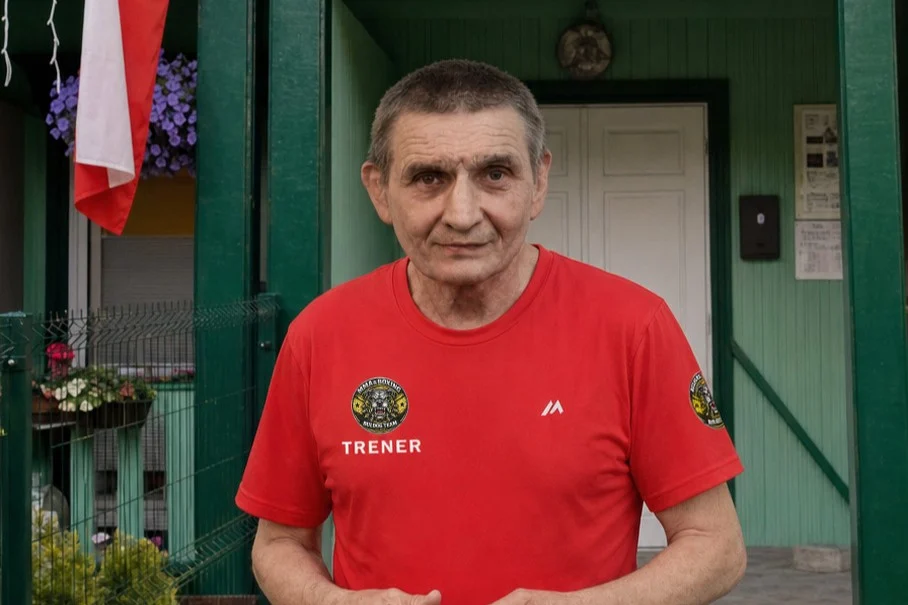
Coach Jacek
How a 1988 newsroom found new digital audiences
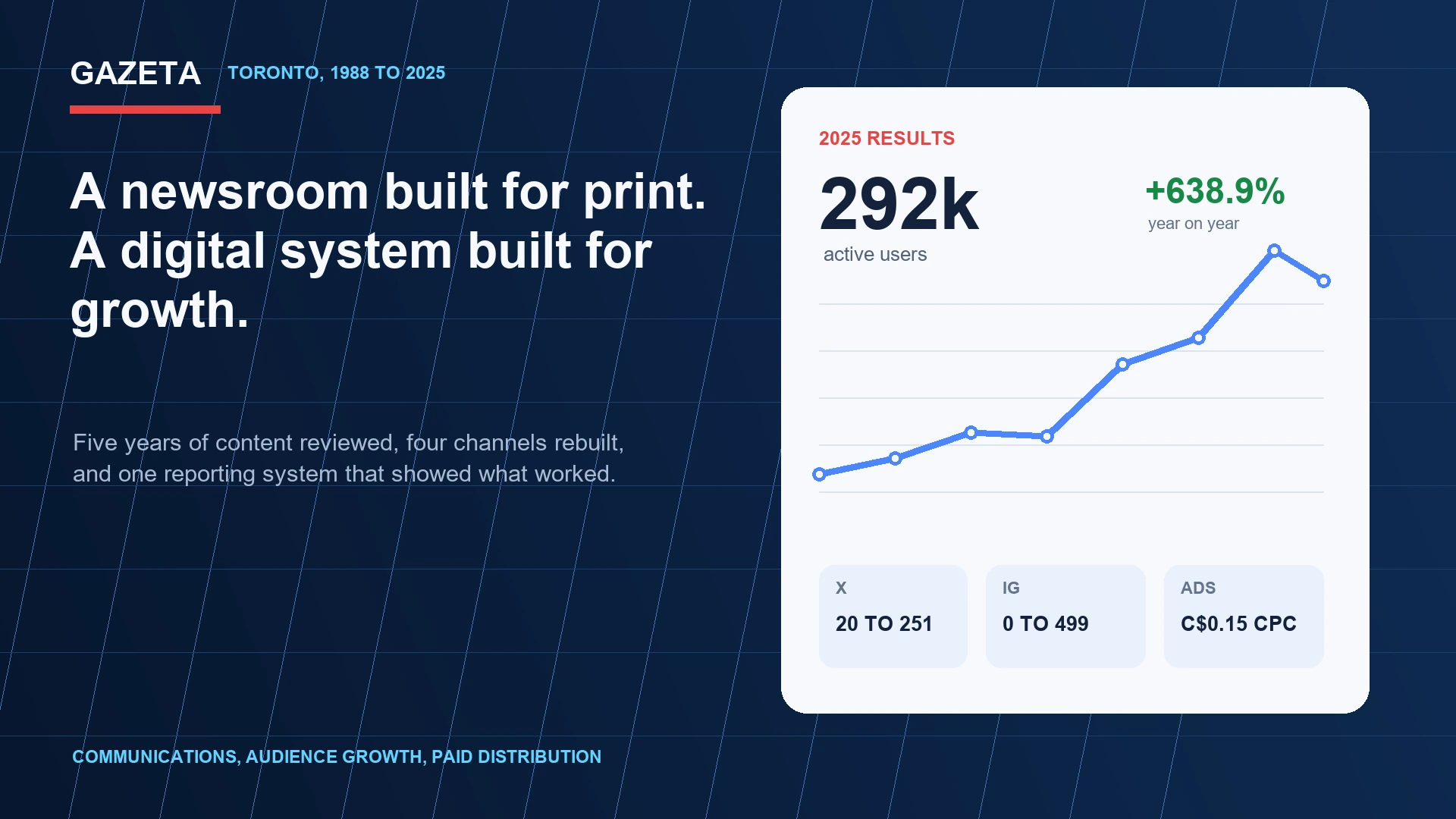
Gazeta, Toronto. Campaign results for 2025
The challenge
Gazeta is an independent Polish-language newsroom founded in Toronto in 1988. It had a loyal audience, a substantial archive and plenty to publish. Its digital distribution was much less developed.
When we reviewed the starting point in July 2025, Gazeta had 20 followers on X and no Instagram or LinkedIn presence. Facebook carried most of the social traffic. Since Meta blocks news content in Canada, a strategy built mainly around sharing article links would also leave part of the home market out of reach.
Our assignment covered the whole communication system. We had to find the right audiences, decide which formats belonged on each channel, set up a workflow a small newsroom could maintain across European and North American time zones, and then supervise the work throughout the year.
Five years of evidence before the first new post
We reviewed Gazeta's content and channel data from 2020 to 2025, then compared the findings with other Polish-language and diaspora media. This showed which subjects already travelled beyond the existing readership, which formats had stalled and where Gazeta had no effective route to potential readers.
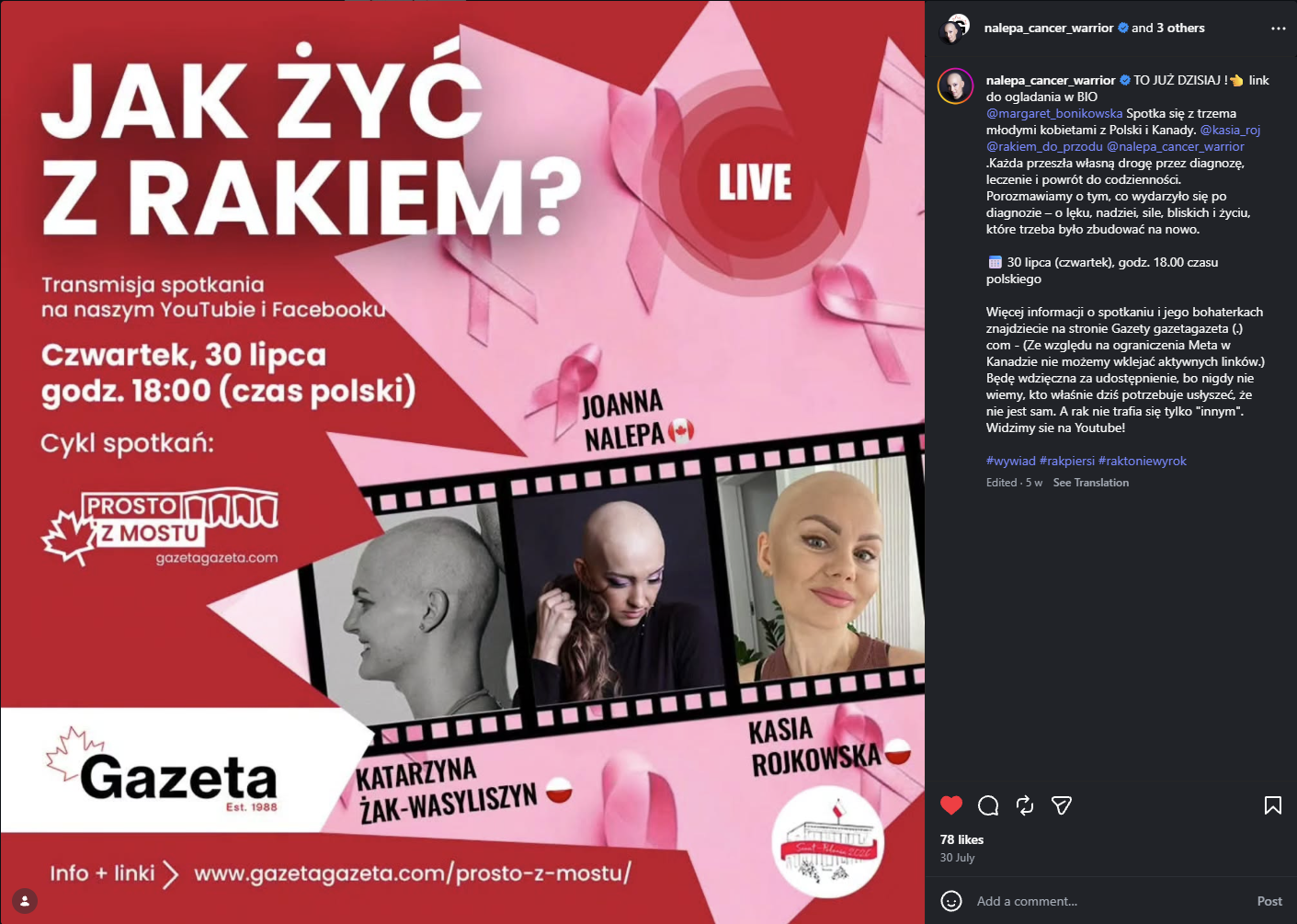
That audit gave each channel a job. Facebook remained the established community channel. X carried news, commentary and links. Instagram introduced the newsroom through short video and visual formats. LinkedIn provided a place for institutional stories, contributors and professional audiences. YouTube Live became a regular home for longer conversations.
We built two daily publishing windows around Europe and North America, introduced recurring editorial formats and prepared a shared workflow for the newsroom, designer and advertising support. Links received UTM tags, results went into one reporting structure and the team could see which subject, format and distribution route had produced a response.
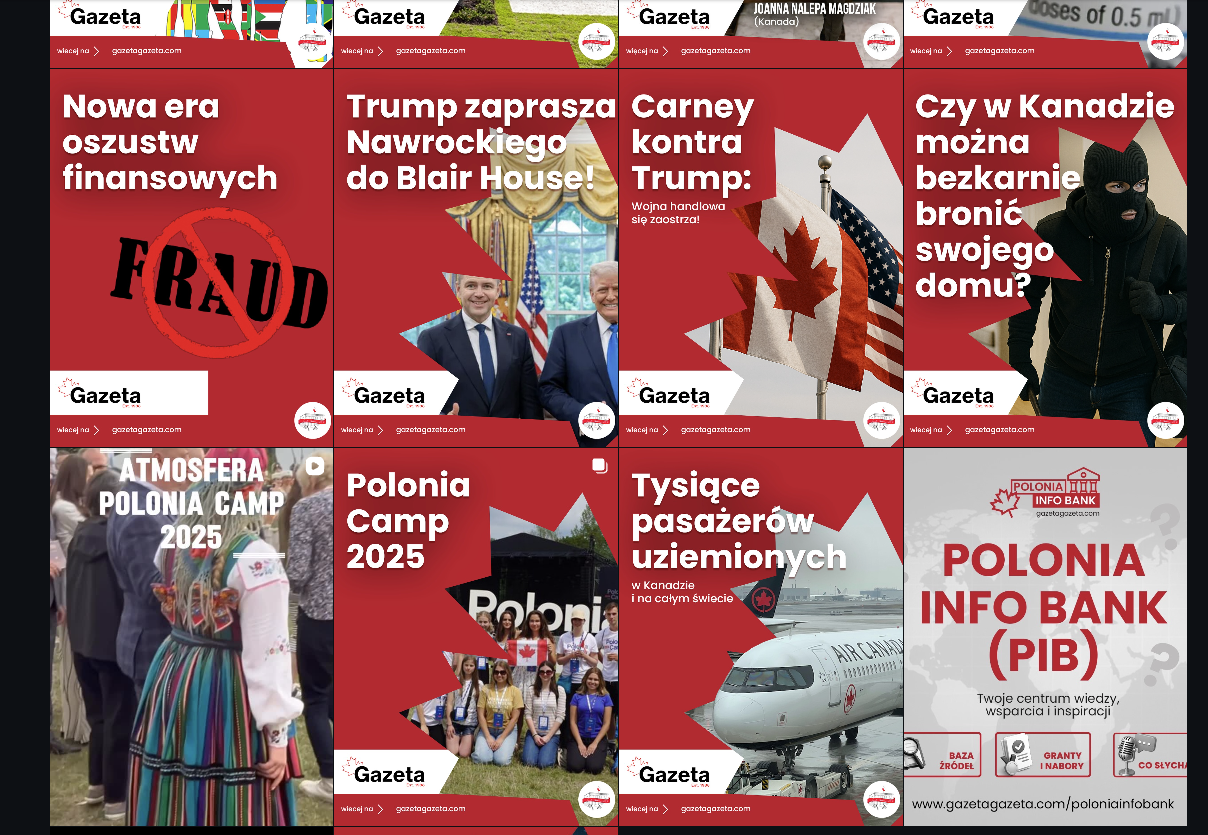
Our graphic designer rebuilt Gazeta's social identity. He prepared platform-specific templates for news, interviews, live programmes and recurring editorial projects, together with logos and visual systems for individual series such as Polonia Info Bank. This gave the small newsroom a faster way to produce recognisable material without making every format look the same.
The new visual system covered news, video, recurring series and projects such as Polonia Info Bank
We launched Instagram and LinkedIn, increased the publishing rhythm on X and rebuilt the mix on Facebook. Throughout the campaign we adjusted the calendar using actual performance rather than treating the first plan as fixed.
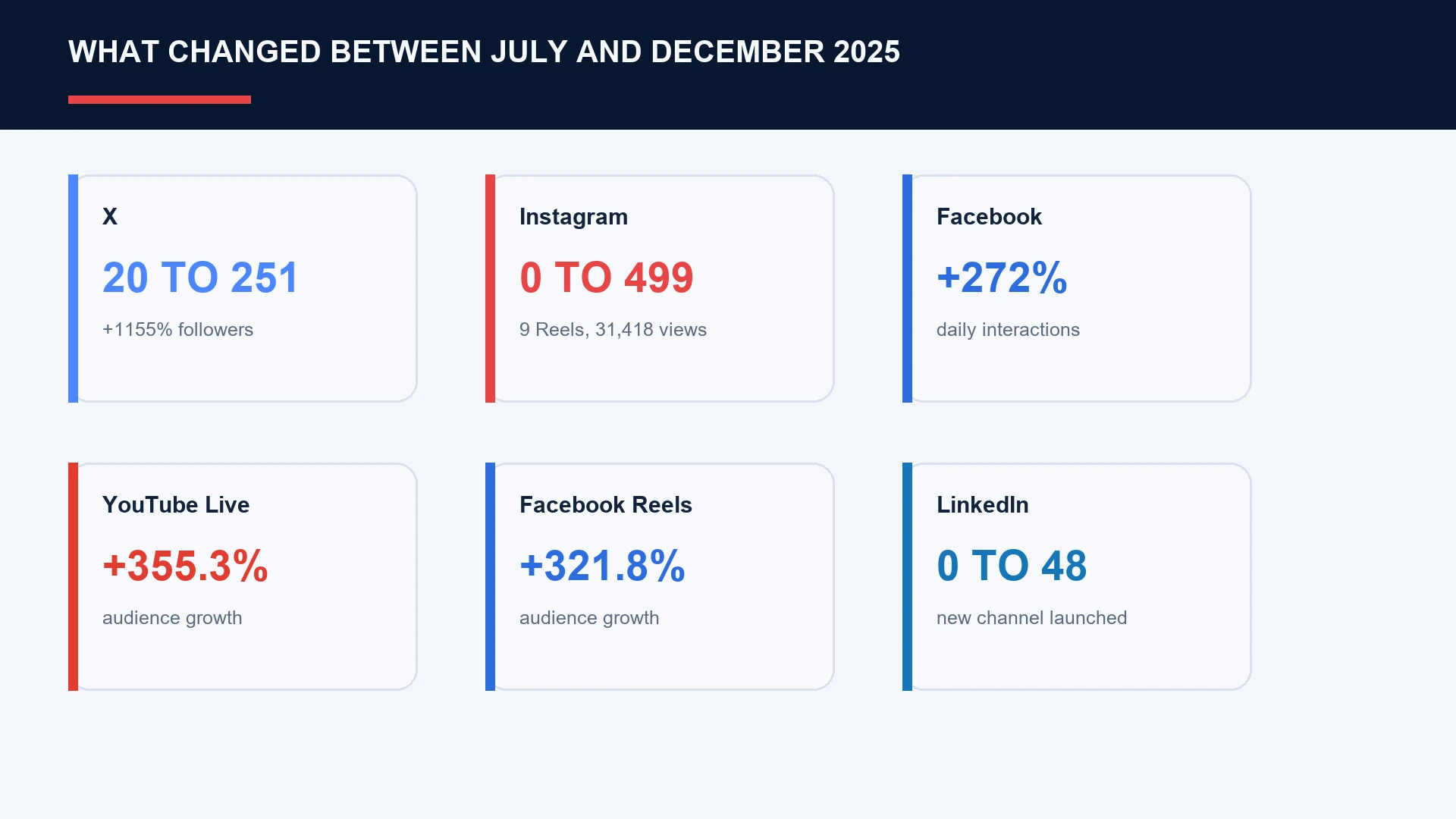
Organic channel results recorded between July and December 2025
Paid distribution with a clear role
Organic publishing showed which stories and formats earned attention. Paid media then extended the best material instead of compensating for an empty channel. We designed the promotion plan and coordinated its delivery with the external advertising team, covering Google Search and Display as well as support for selected video and newsletter campaigns.
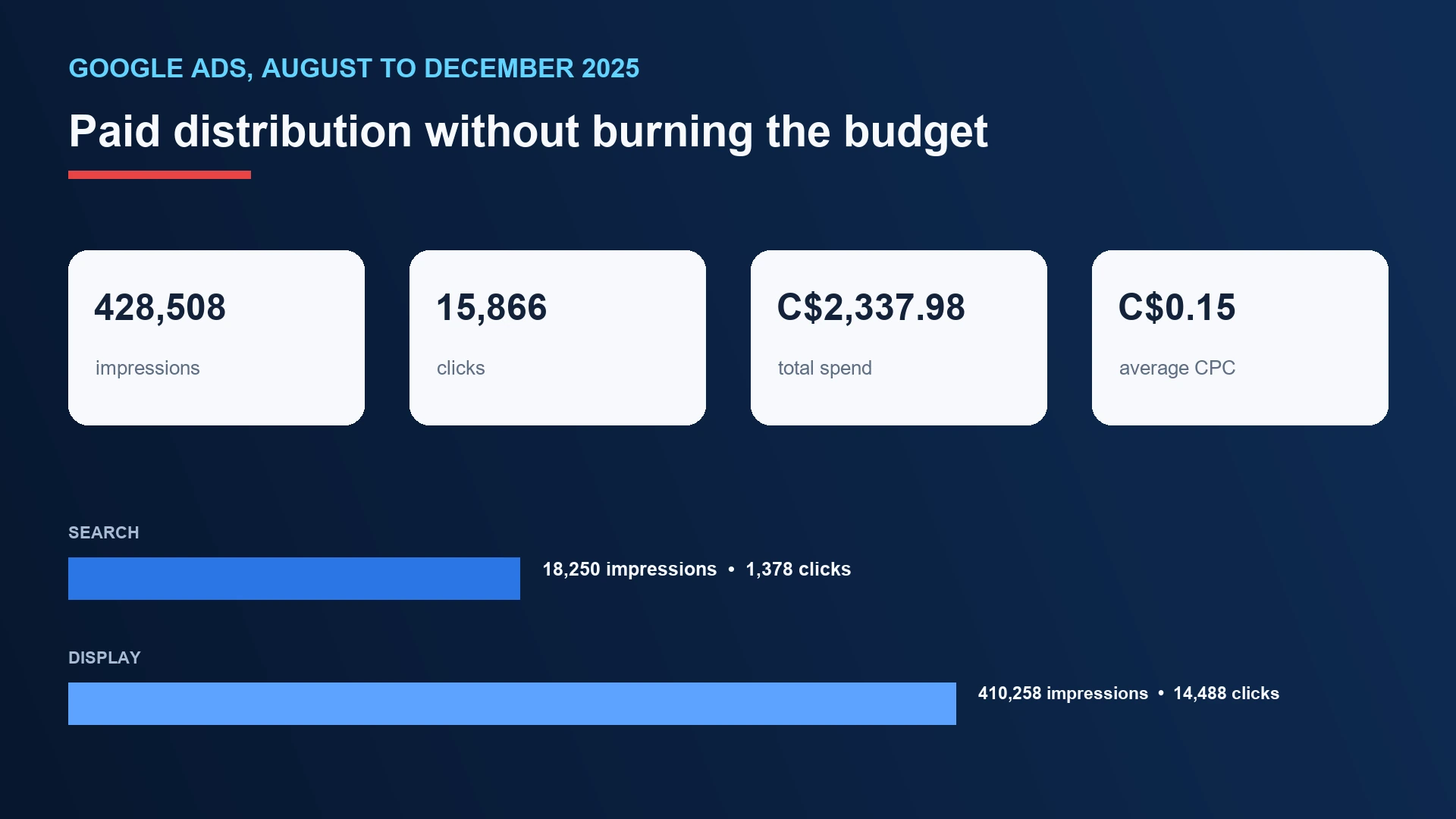
The provider's report for August to December records 428,508 impressions, 15,866 clicks and total spend of C$2,337.98. Average cost per click was C$0.15. Search generated 1,378 clicks from 18,250 impressions, while Display generated 14,488 clicks from 410,258 impressions.
Paid campaign figures reported by the external advertising provider
What changed
Between July and December, Gazeta's account on X grew from 20 to 251 followers. Publishing increased from fewer than one post a week to 7.4, while average views per post rose from 46 to 121.2.
The new Instagram account reached 499 followers. Nine Reels generated 31,418 views. Facebook's follower count barely moved, rising by 0.76%, but daily interactions increased by 272%. That distinction mattered more than presenting a large percentage without its baseline.
One of the new editorial formats in use on Instagram
YouTube Live audience grew by 355.3%, from 1,630 views across three videos to 7,421 views across ten. Facebook Reels audience grew by 321.8%. LinkedIn finished the period with 48 followers. It was still a small channel, but Gazeta now had an operating presence where none had existed.
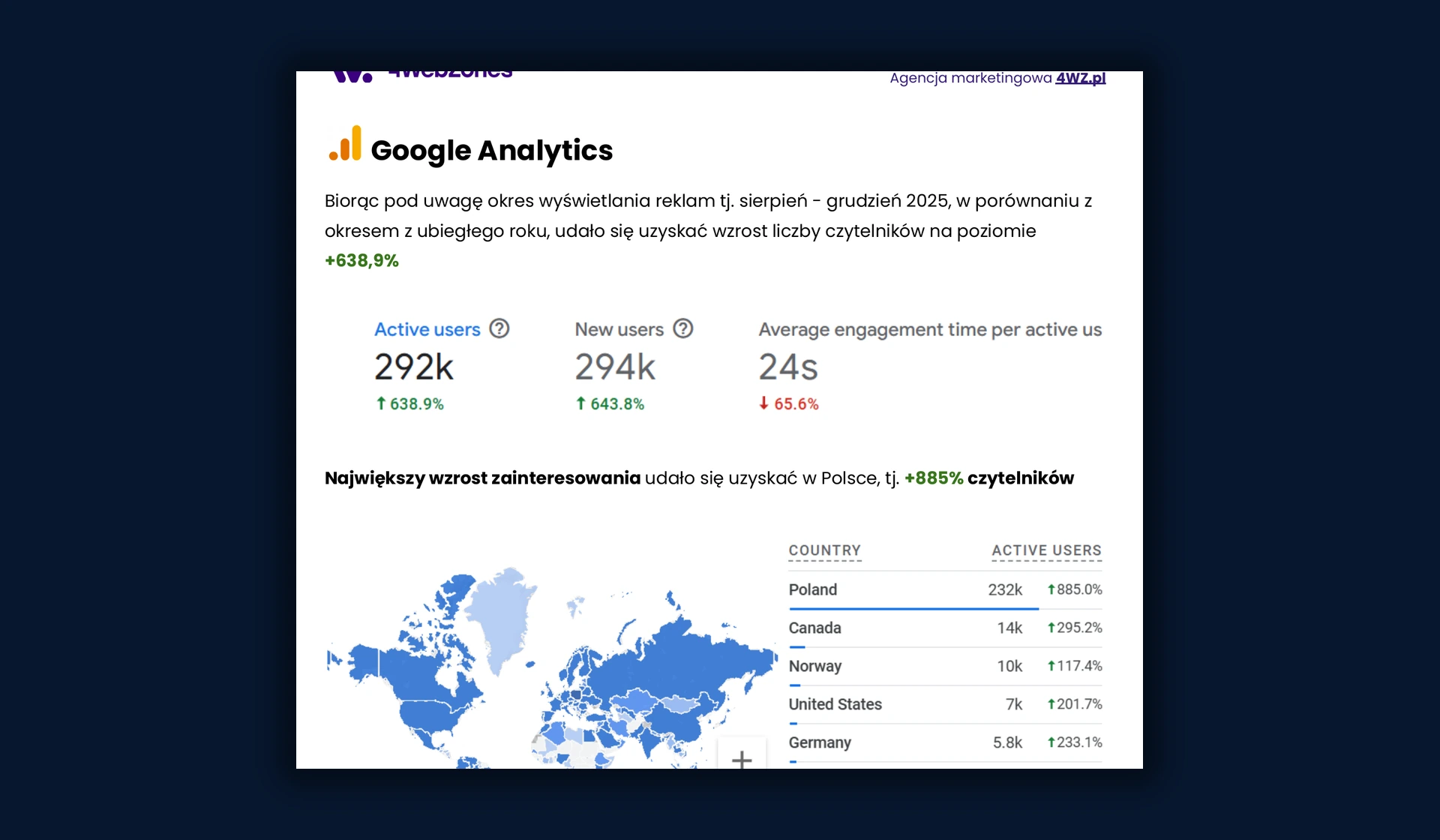
For the August to December measurement period, Google Analytics recorded 292,000 active users, 638.9% more than in the same period a year earlier. Organic changes, paid distribution and a stronger publishing rhythm ran at the same time, so we report the combined result rather than assigning the whole increase to one tactic.
The source report also showed the result that needed more work
The useful bad news
Reach grew much faster than depth. Average engagement time fell to 24 seconds, down 65.6% year on year. Facebook interactions rose sharply, yet its follower base remained almost flat. Growth from a very low starting point also made some percentages look more dramatic than the absolute numbers.
We kept those figures in the analysis. They showed exactly what the next stage needed: better landing pages, clearer routes from a social post to another article, stronger newsletter conversion and more systematic reuse of interviews and live programmes.
What remained after the campaign
Gazeta ended 2025 with two new channels, a working short-video and live format, a repeatable publishing calendar and one measurement system covering editorial and paid distribution. The newsroom also had a clearer view of which audiences it could reach in Canada, Poland and other diaspora markets.
The campaign produced large gains, several modest ones and one clear warning about engagement. That full picture was more useful than a page of selected success metrics. It gave the team a practical basis for deciding what to publish, where to distribute it and what to fix next.
Figures combine our channel analysis for July to December 2025 with the external advertising provider's report for August to December 2025. Website comparisons refer to the same months of the previous year.